![[Home]](/images/home.png "Home page") pwall.net
pwall.netFamily Connections
My great-grandparents – the ones from whom I inherit the name Wall – were born in County Wicklow,
Ireland.
They had three children in Ireland, and then migrated to England, where they had six further children, including
my grandfather.
(As an aside, Irish law allows persons two generations removed from someone born in Ireland to claim Irish
nationality – and hence a European Union passport – but I am three generations removed so I
sadly don’t qualify.)
Also, my maternal grandfather’s father was born in Dublin, which means that out of a total of eight
great-grandparents, I have three born in Ireland.
Despite all that, and despite the fact that I lived the first 17 years of my life on the coast of the Irish Sea, I
had never previously visited Ireland.
(I’m not counting a brief stopover at Shannon airport in the days when transatlantic flights sometimes
landed there.)
Dublin
I had arranged to meet my friends from the U.S. in Dublin, but I arrived a day early to spend the day with a
friend from my school days in England.
He had spent a lot of time in Ireland after leaving school, and he was an ideal person to show me around Dublin.
We went west to Maynooth, north to Howth, south to Greystones and ended the day having dinner at the
Royal St. George Yacht Club in Dun Laoghaire.
That turned out to be the only day without rain in a total of eight days in Ireland.
The next day, when the rest of the travelling party arrived, we were constantly dodging showers (with mixed
success) while trying to see the sights of Dublin city.
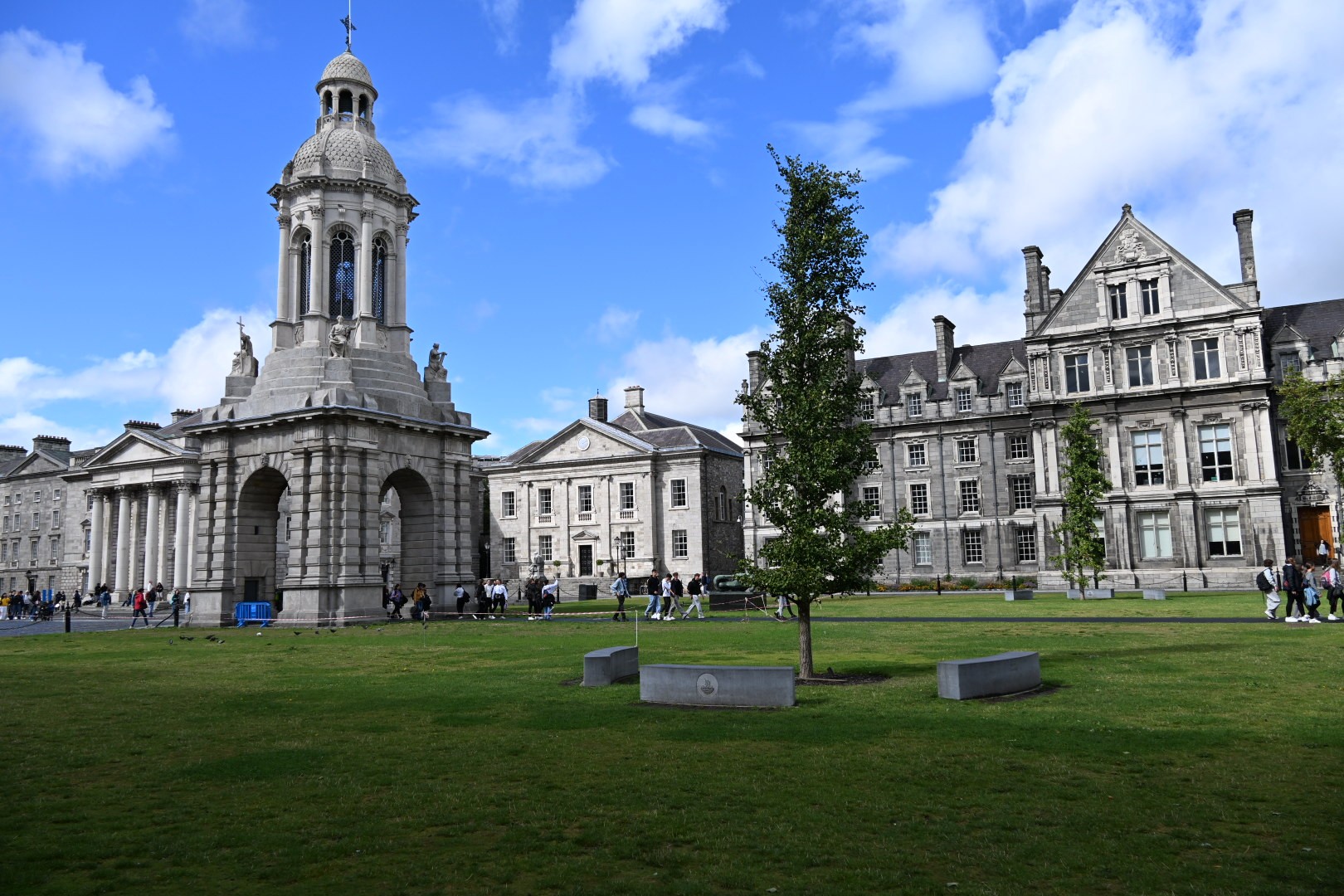
Trinity College Dublin.
Don’t be fooled by the blue sky – the interlude between showers was fleeting.
Trinity College is home to The Book of
Kells, possibly the most famous decorated manuscript of the mediaeval period.
It was created over 1200 years ago, and I can only assume that it was intended to inspire awe in those who saw it.
Only one double-page spread is available to be viewed at any time, so the online reproductions on their website
show more of the book than is visible in the gallery, but it’s still breathtaking to see one of the great
artefacts of Western civilisation in the flesh (so to speak).
County Wicklow
The next day we headed south to County Wicklow, stopping at Powerscourt.
This is a large country estate, dating from the period when the British aristocracy owned large parts of Ireland.
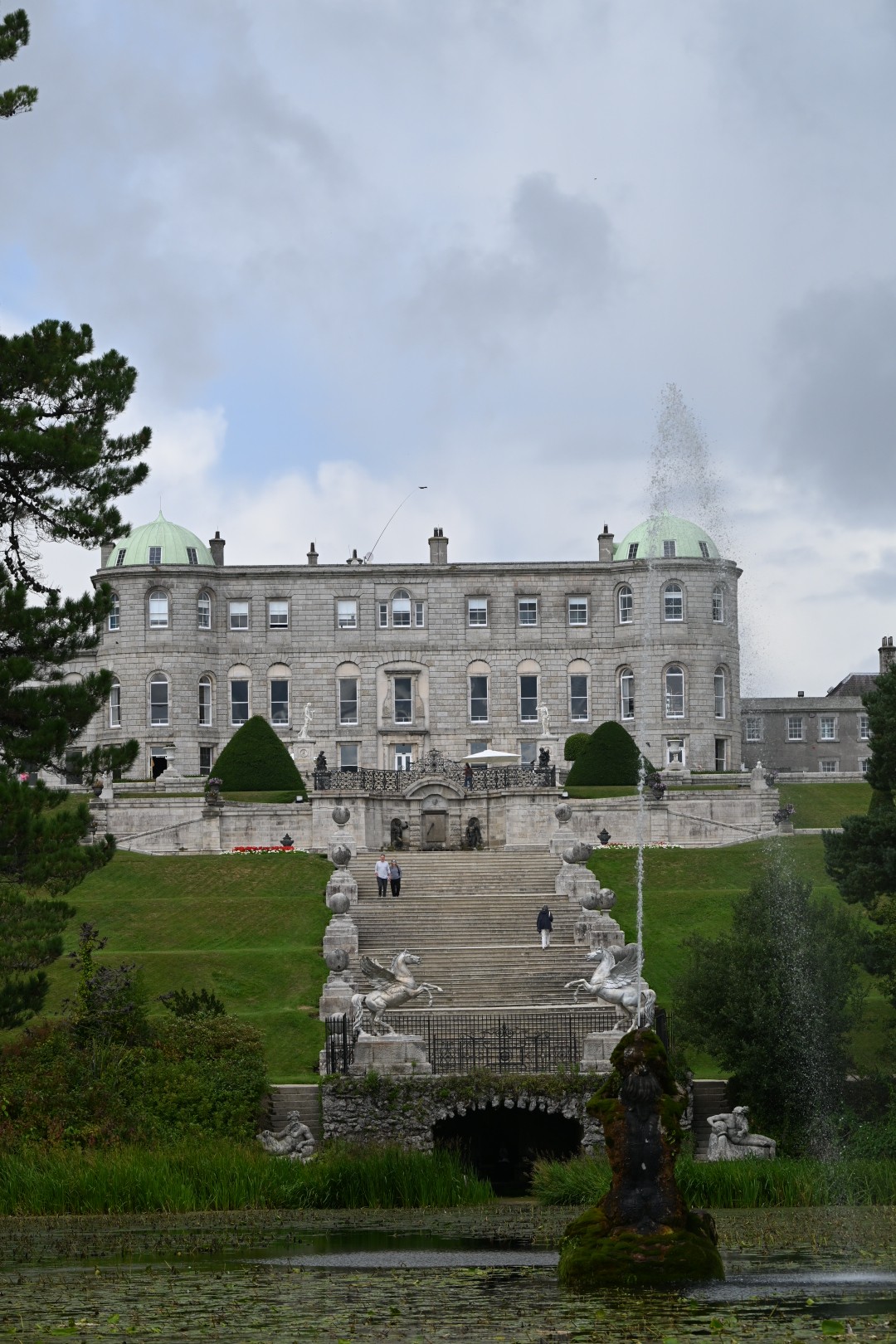
The main façade of Powerscourt.
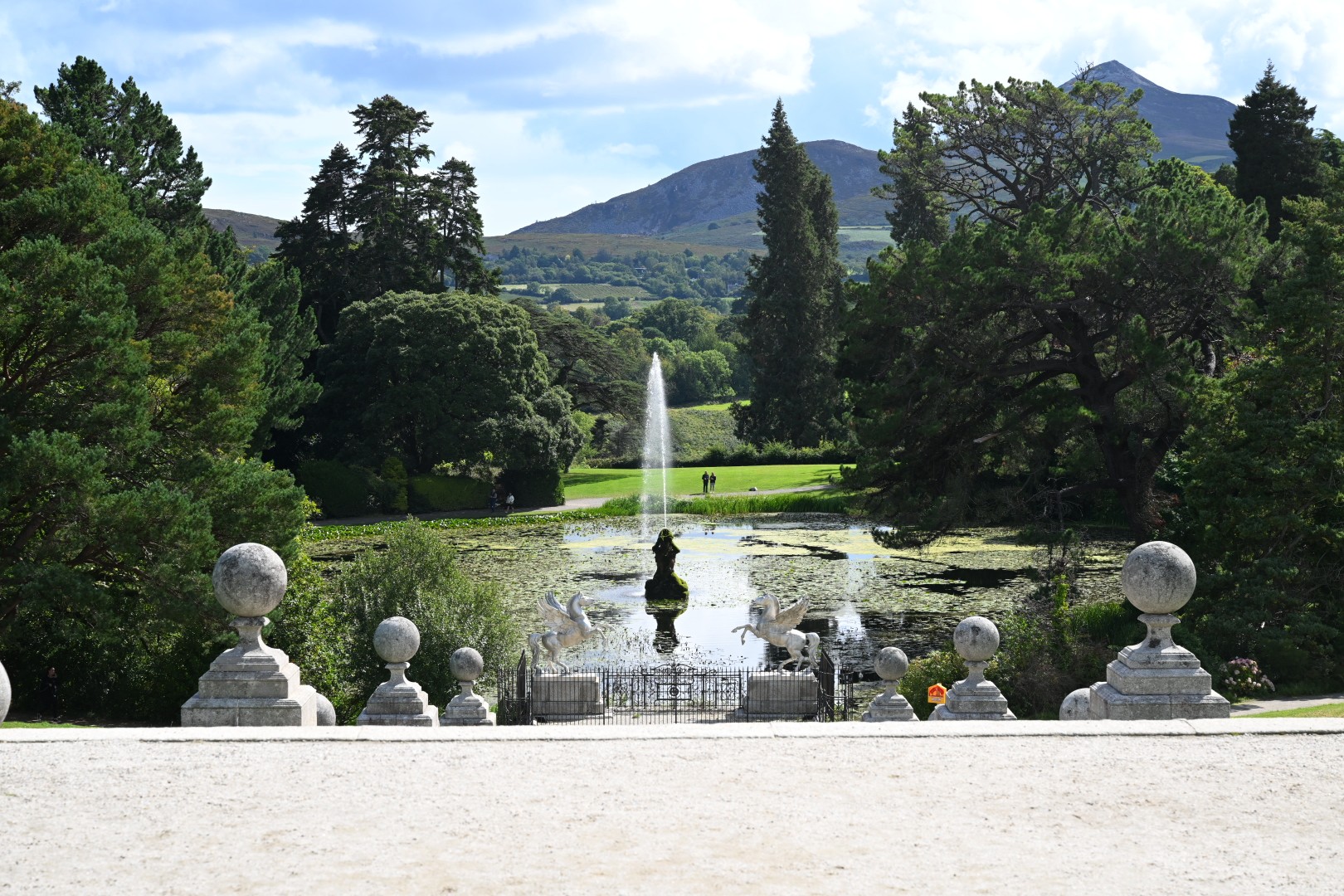
The gardens at Powerscourt, with the Great Sugar Loaf in the right background (the reverse of the above view).
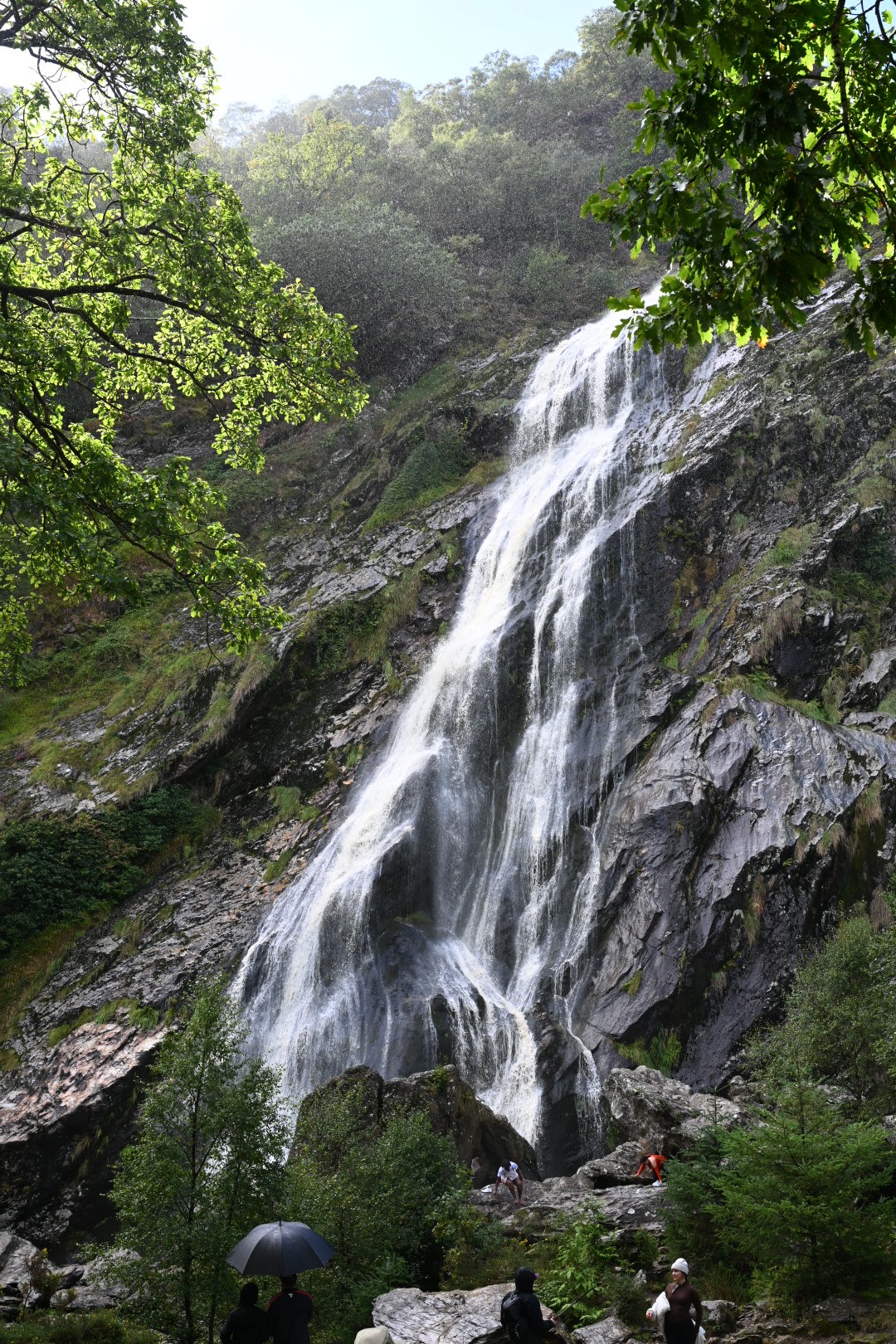
Powerscourt Waterfall, the second-highest waterfall in Ireland.
Note the person carrying an umbrella in the foreground – that’s not to ward off the spray of the
waterfall.
From there we headed south, to the remains of an early monastic settlement at Glendalough.
The settlement was founded in the 6th century; the buildings that remain are estimated to have been built between
the 10th and 12th centuries.
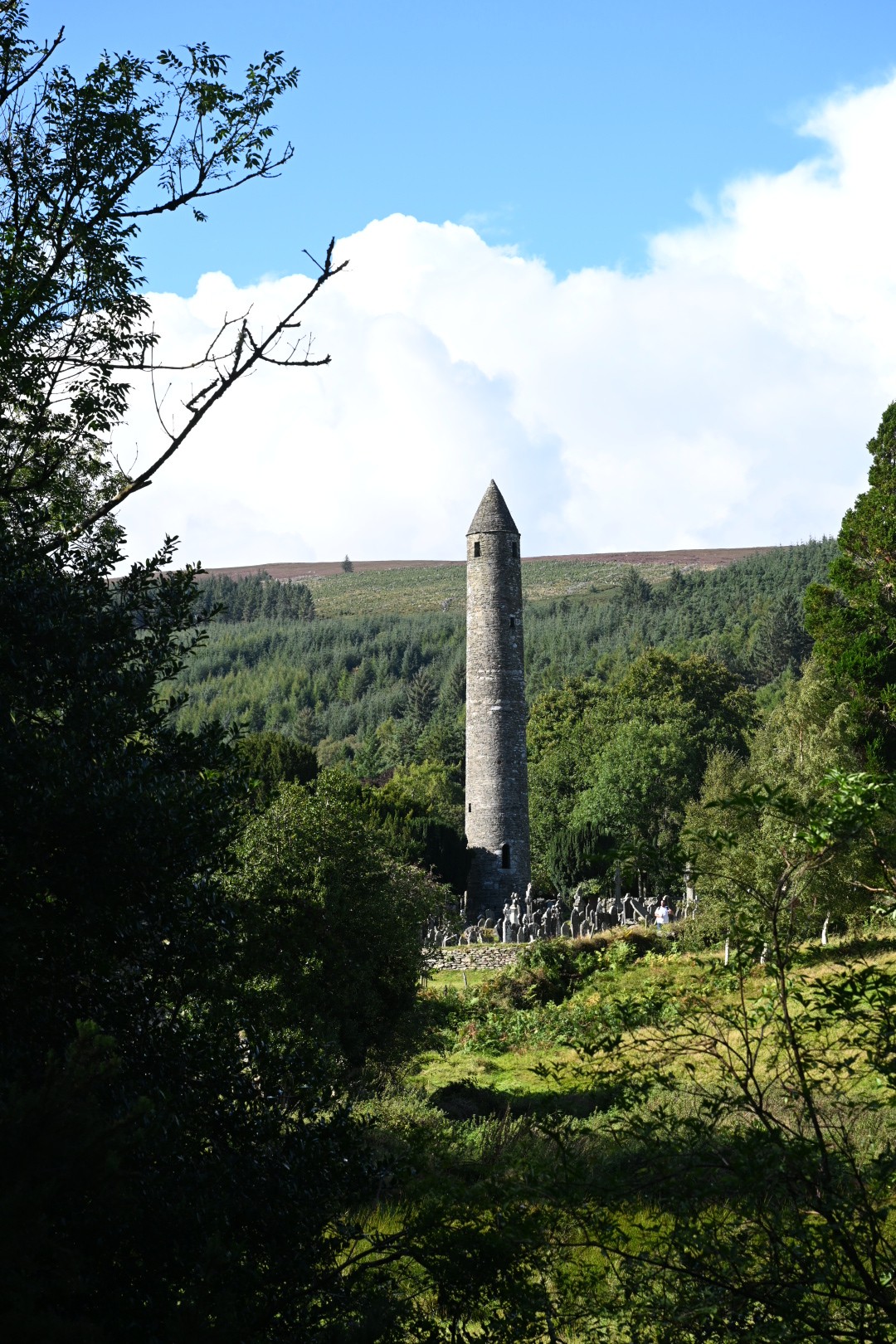
The Round Tower at Glendalough.
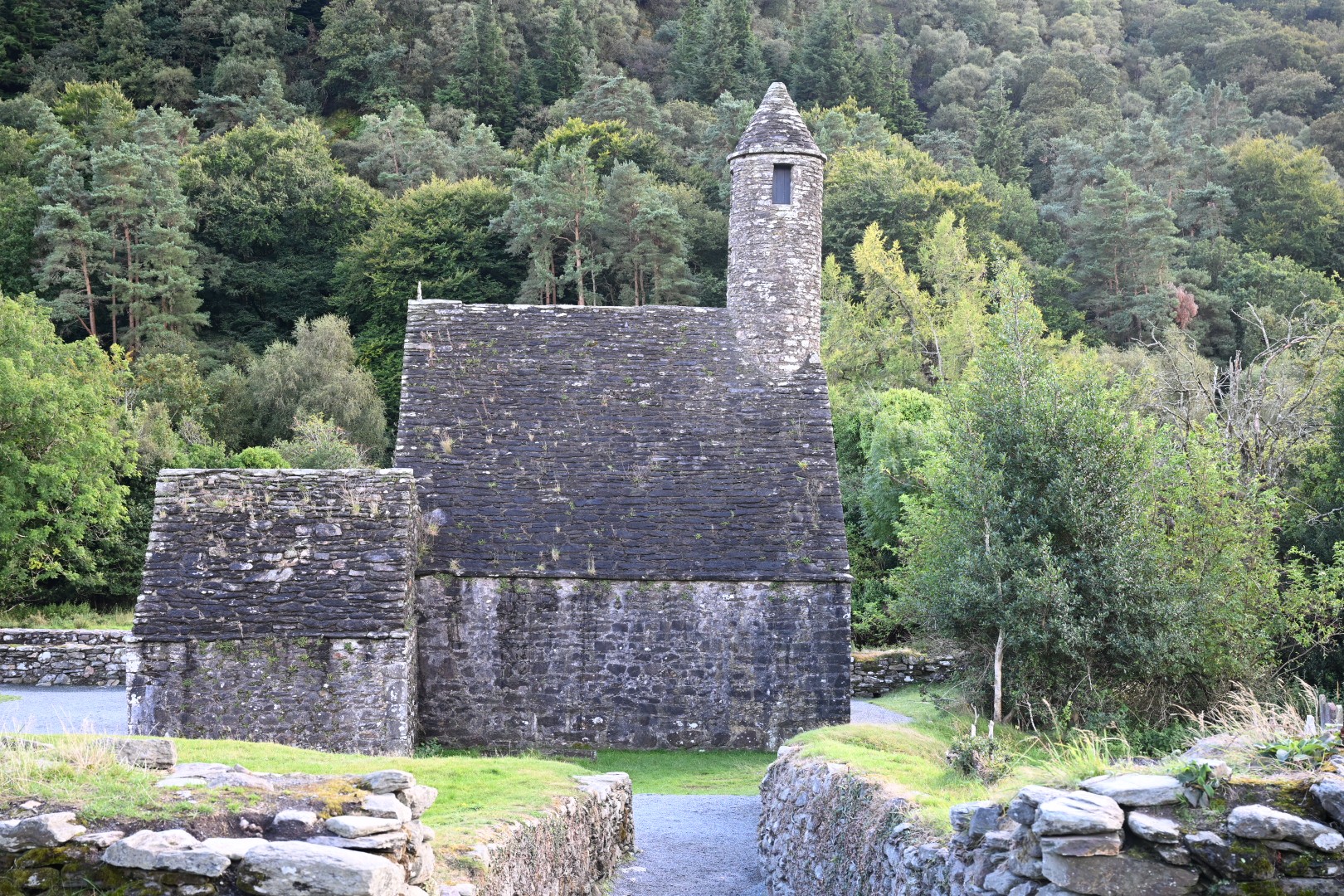
St Kevin’s church, Glendalough.
And it was here that we had our closest encounter with the wildlife of the country, seemingly unfazed by the
presence of human visitors.
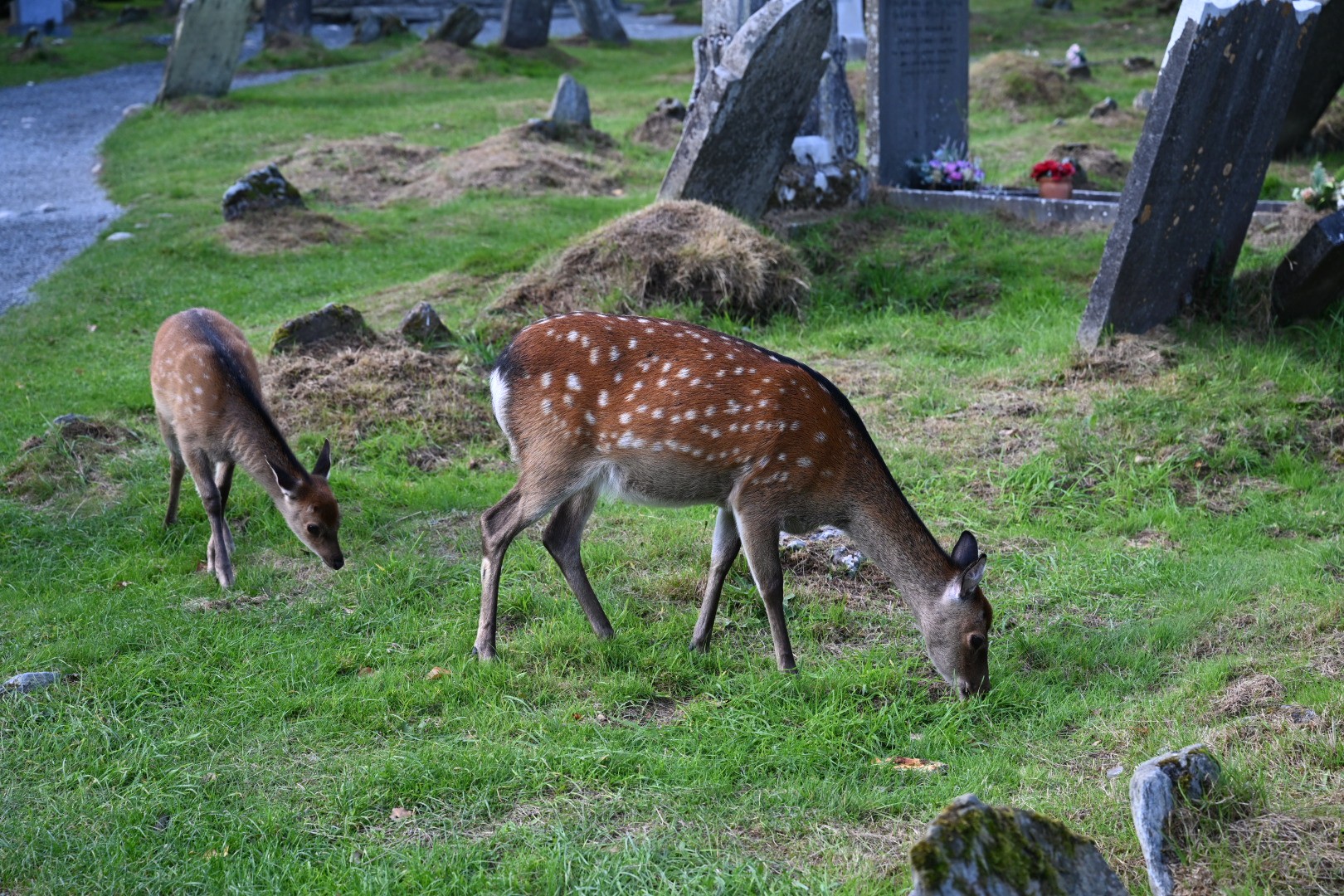
Deer (probably introduced sika deer – cervus nippon) grazing among the gravestones at Glendalough.
Before leaving County Wicklow, I tried to find some traces of my family.
I located a church that I think was the one where my great-grandparents were married, but sadly, it was locked.
I wondered whether the graveyard would have gravestones with the family name, but it too was locked.
A passer-by told me that the church was struggling to find a minister (in increasingly non-religious Ireland) and
the church was open only for scheduled services.
I don’t remember my grandfather – he died before I was two years old.
His wife, my grandmother, told me that his family came from the Vale of Avoca, which she described as a recognised
area of natural beauty.
I doubt whether either of them ever visited Ireland, but it was good to be able to see the area for myself, and to
walk where my ancestors had walked.
The Rock of Cashel
We continued south-west to Cashel, site of the Rock of Cashel.
The Rock is a very large geological feature rising dramatically from a relatively flat plain, and it would have
been valued as a site of fortification from the very earliest times of human occupation of the area.
It is currently the site of a ruined castle and cathedral, along with another round tower similar to the one at
Glendalough.
We arrived too late in the day to take the guided tour of the ruins, but perhaps this is one of those features
best photographed from a distance.
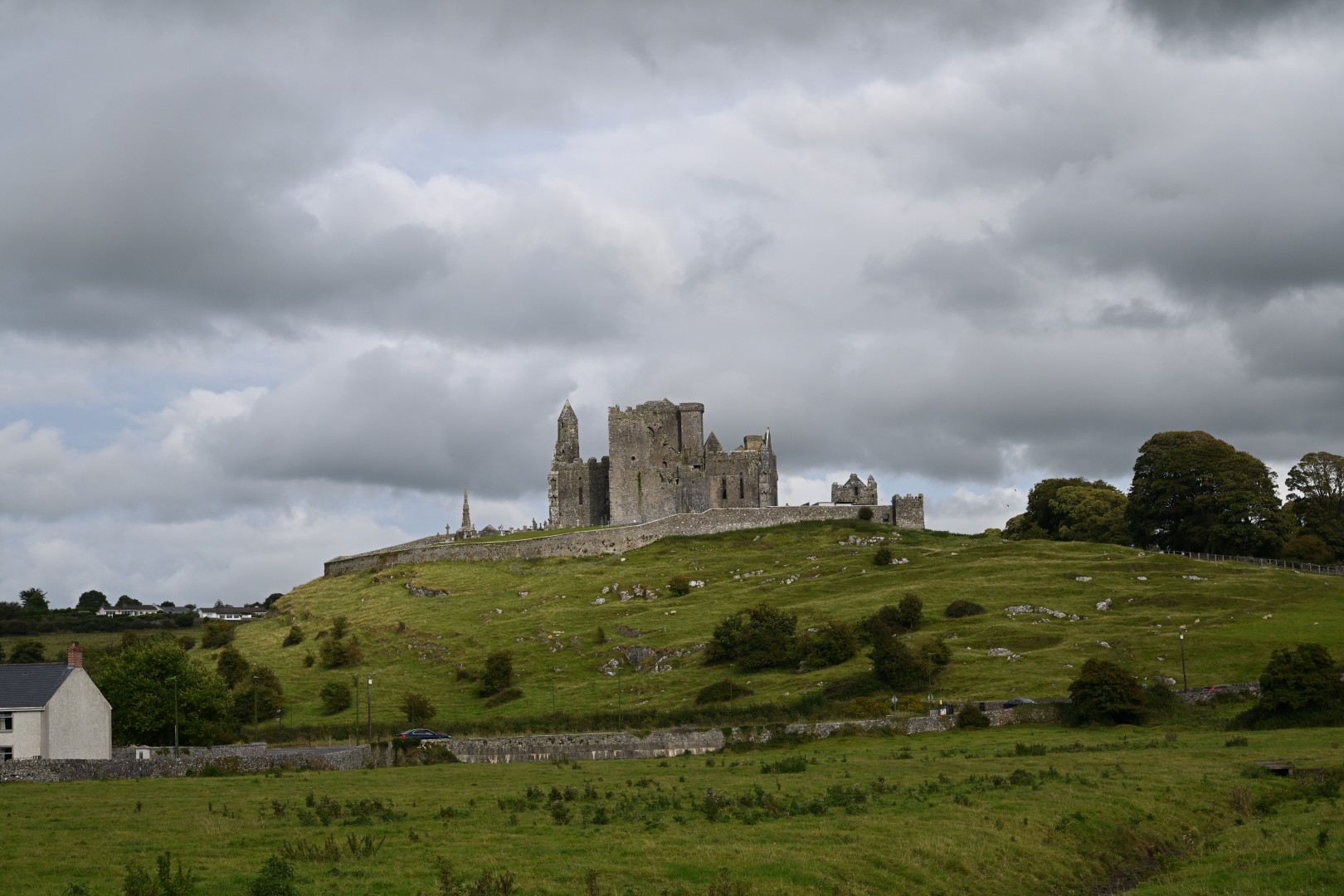
The Rock of Cashel, viewed from the flat land nearby.
Midleton
We stayed two nights in the town of Midleton, just east of Cork.
Using that as a base, we visited the small town of Kinsale, a picturesque port town a little way south of Cork.
Something we had noticed a few times on our travels was the tendency of the Irish to paint their buildings in
bright colours, and Kinsale was a particularly good example of this.
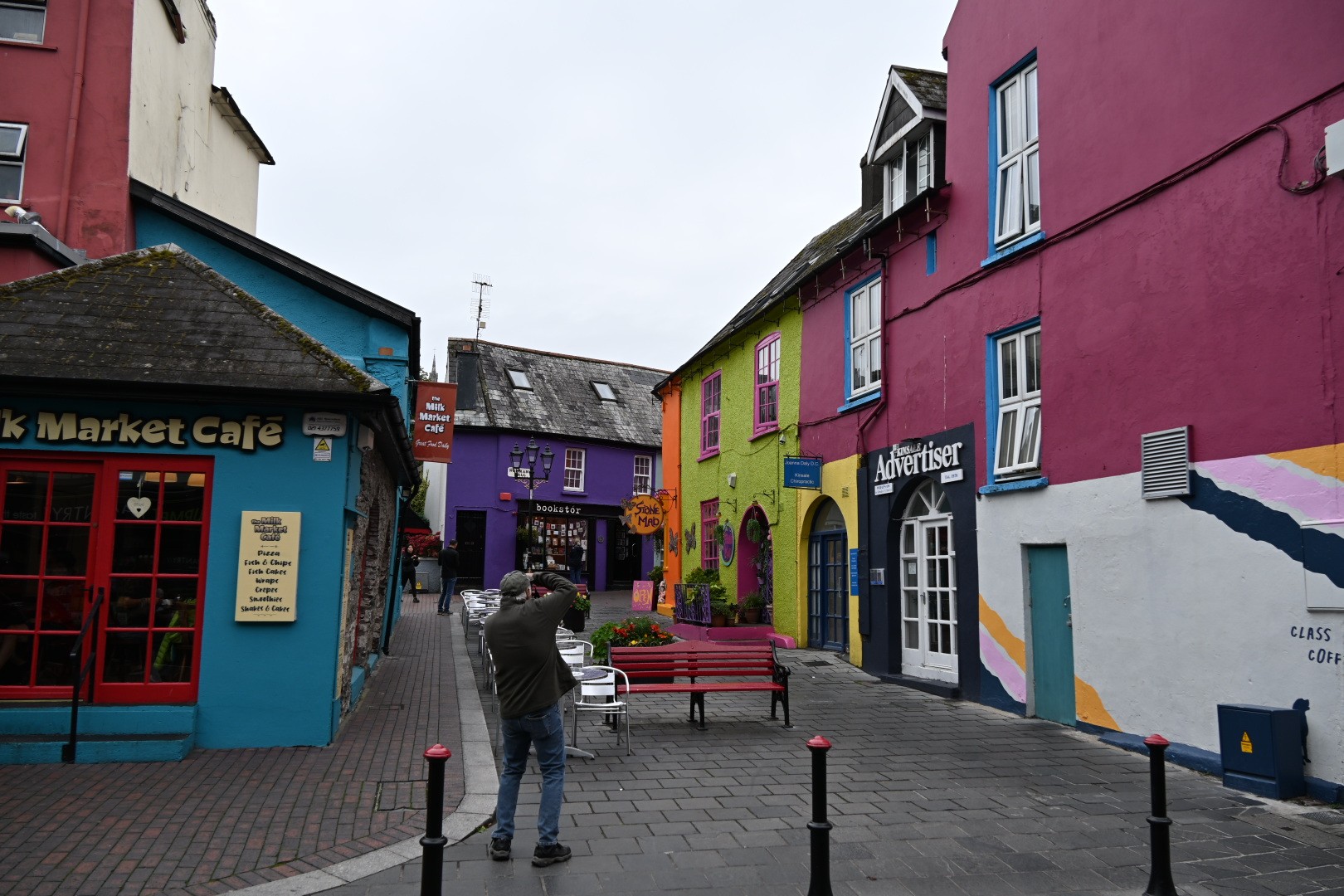
A street in Kinsale – just one example of brightly-coloured Buildings we saw all over Ireland.
Midleton is home to a distillery which produces whiskey for a number of brands – Jameson, Powers, Redbreast
and others.
We took a distillery tour, and I can now claim to be a little better-informed than I was previously on Irish
whiskey.
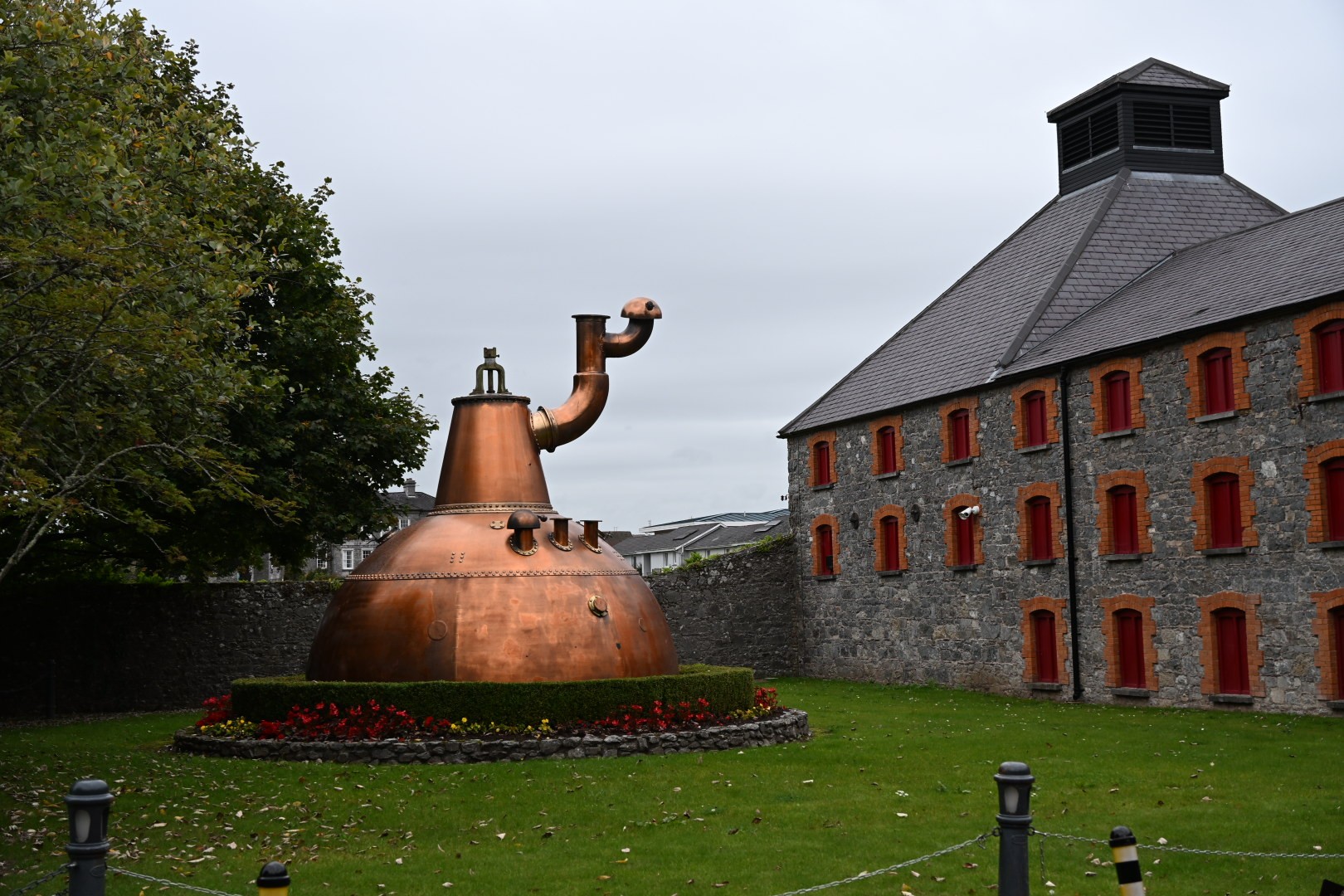
Distillery equipment presented for display purposes at Midleton Distillery.
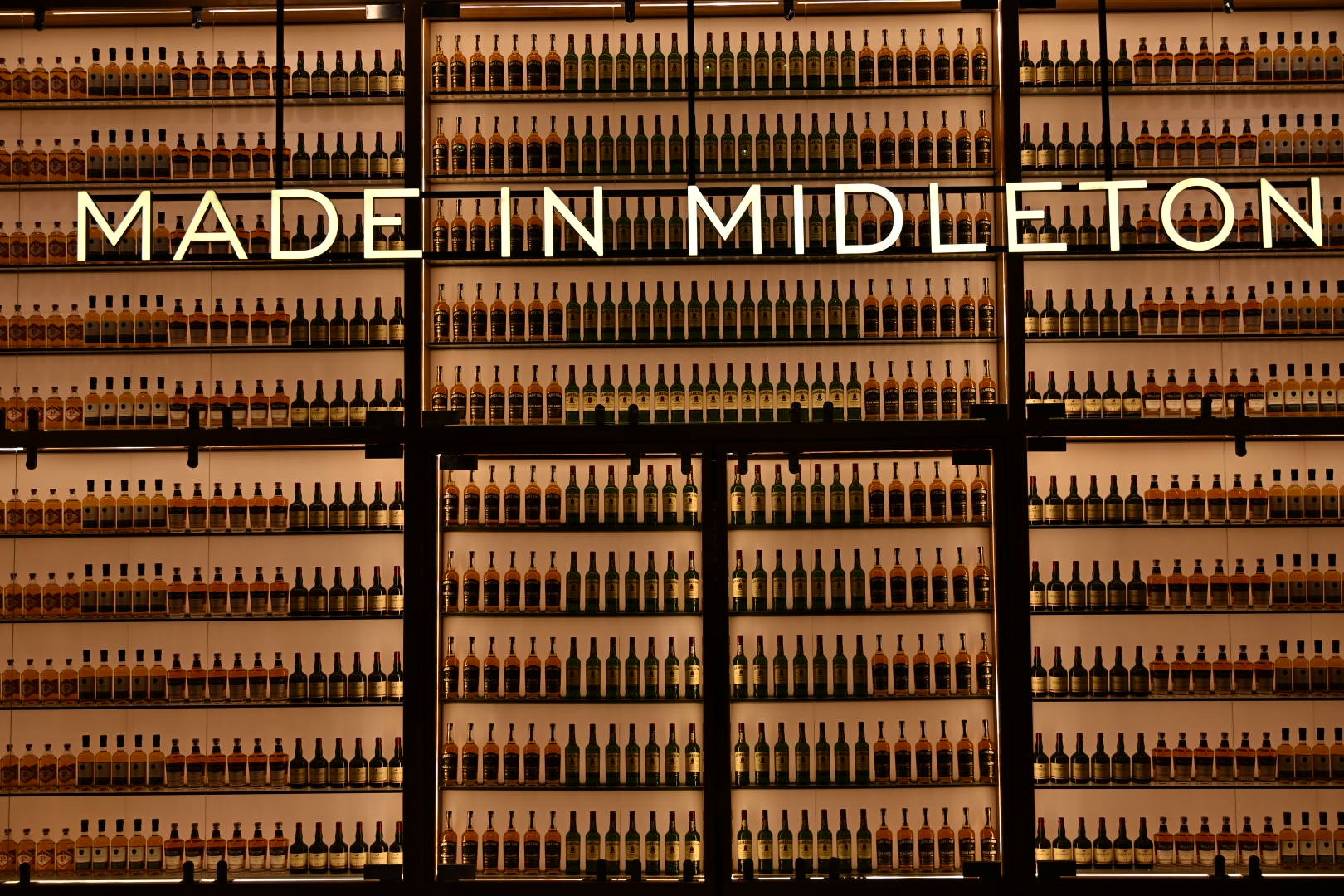
Display wall at Midleton Distillery, showing bottles of many of the brands produced there.
The Ring of Kerry
The Ring of Kerry is a tourist route around County Kerry.
We did an incomplete loop, starting in Killarney and heading in a clockwise direction, but instead of finishing
back in Killarney, we headed to our next destination in Dingle.
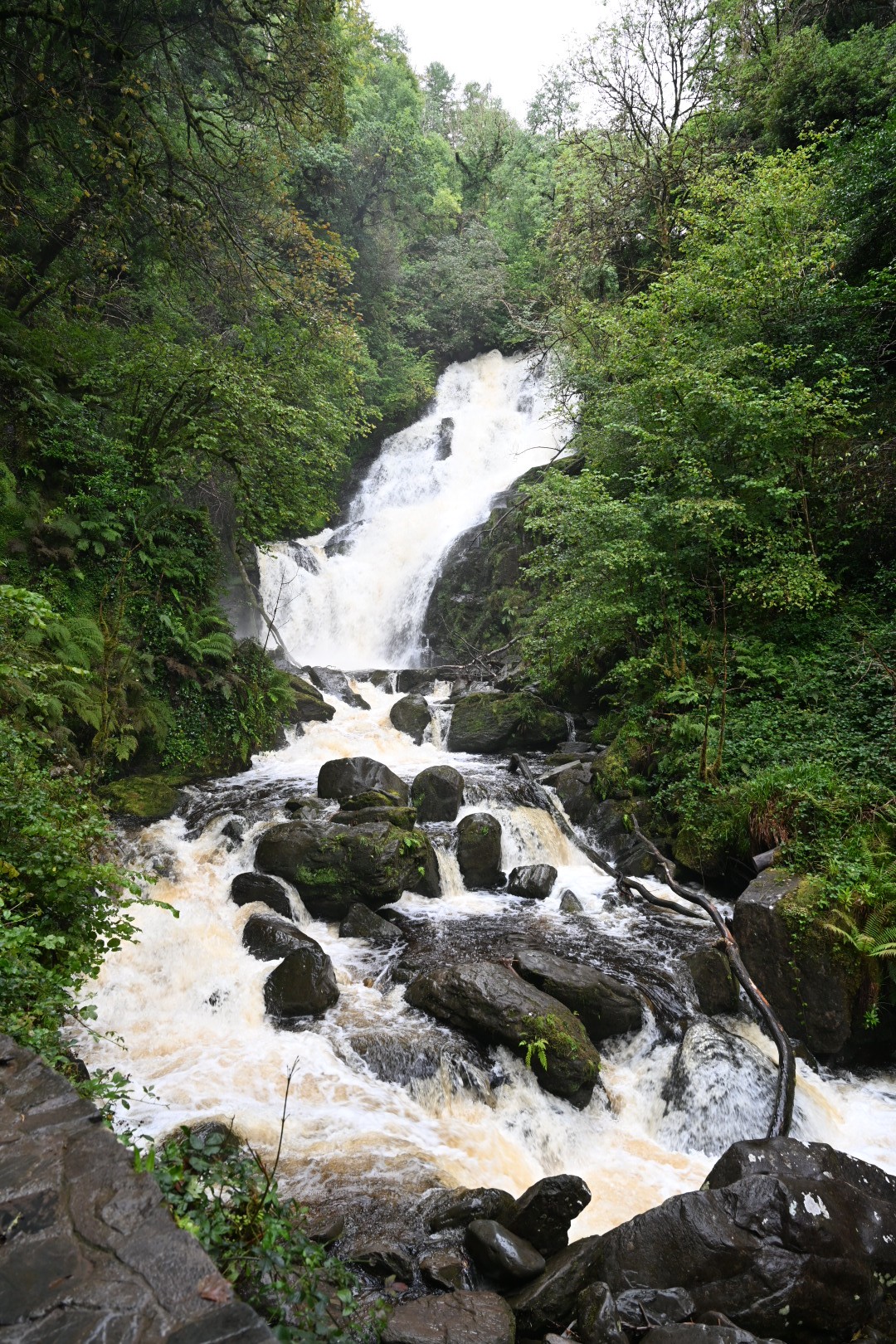
Torc waterfall is one of the first stopping points on the Ring of Kerry.
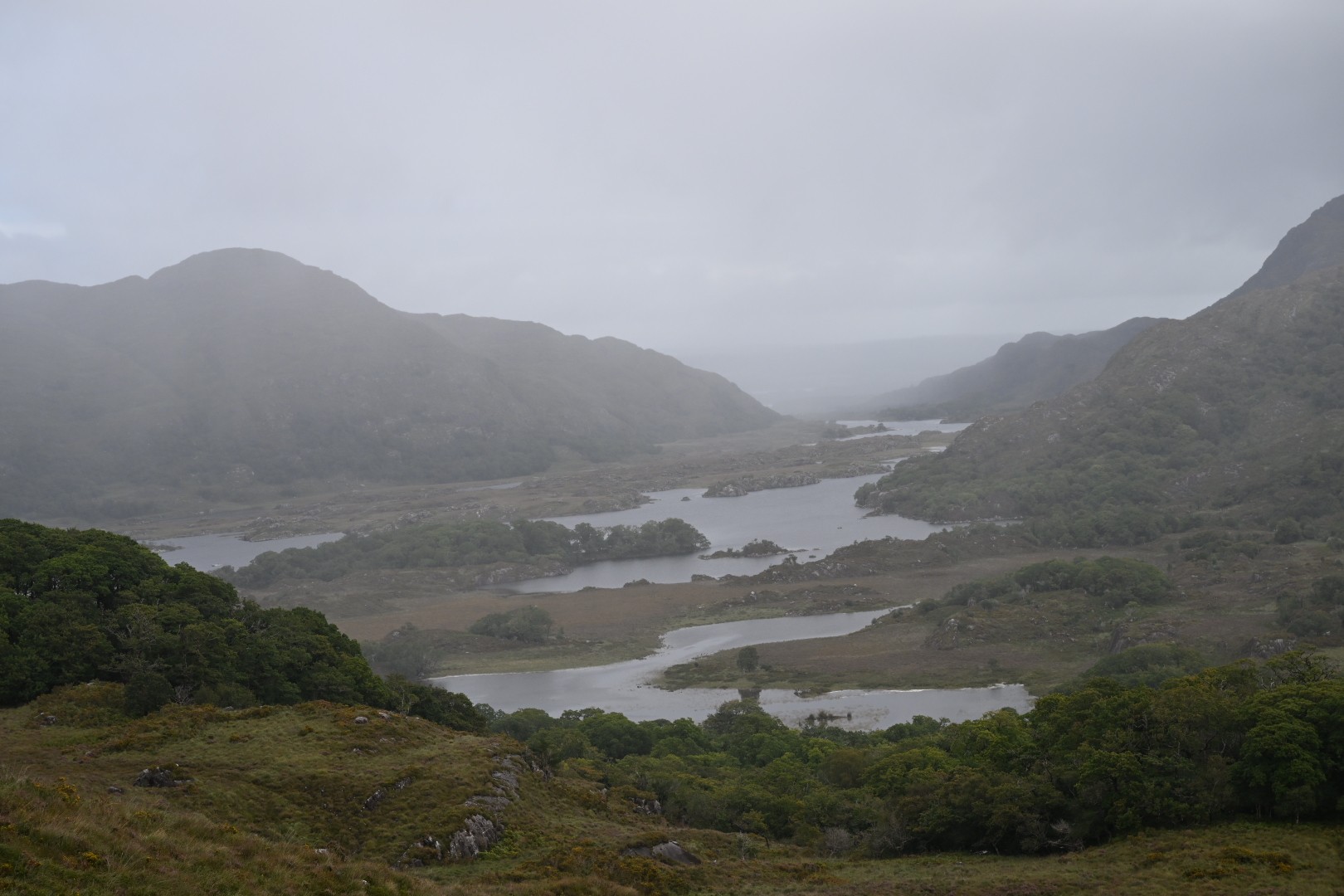
The “Ladies View” is a famous scenic view on the Ring of Kerry.
It probably looks better without the rain.
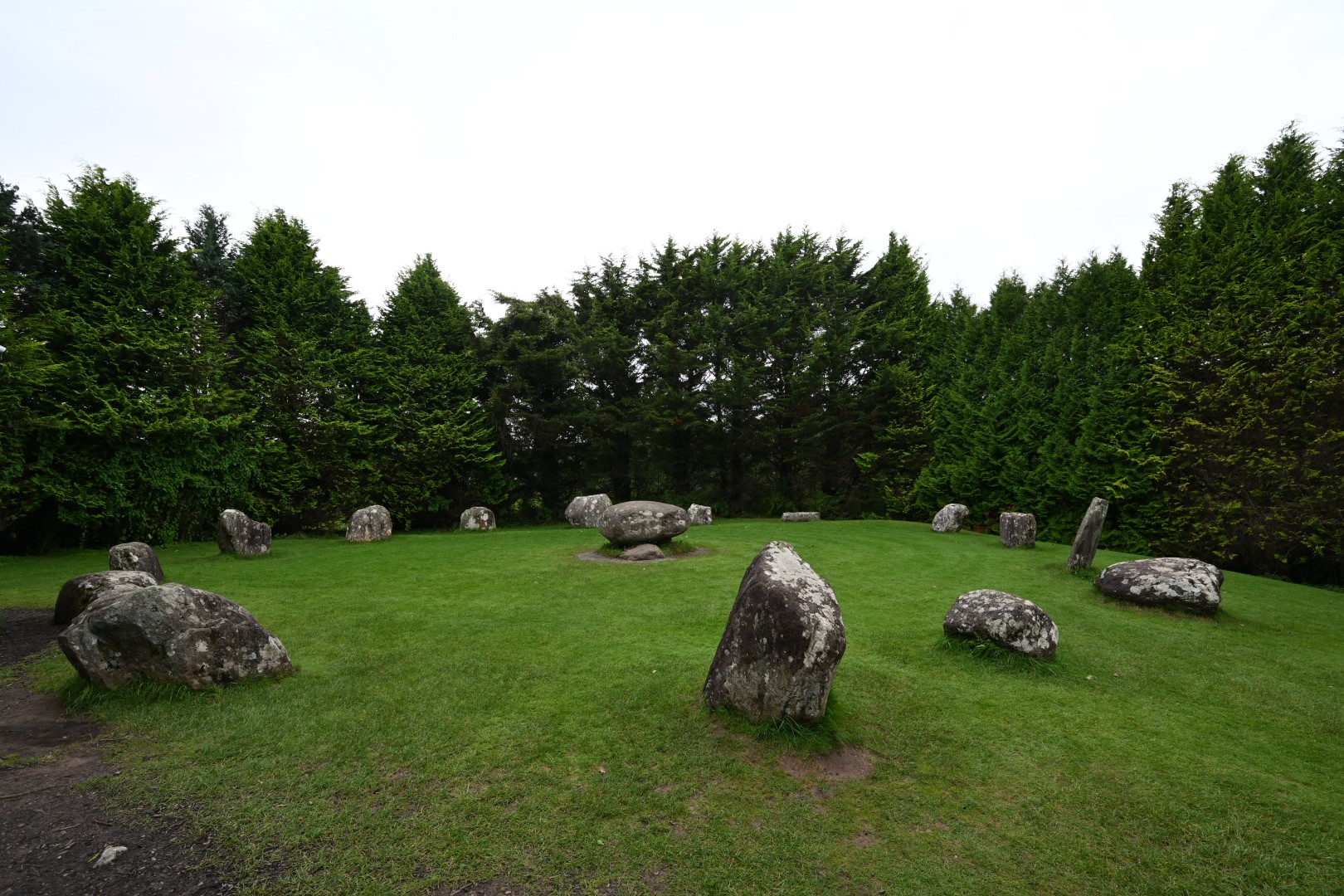
The small town of Kenmare has a stone circle, which may be over 4,000 years old.
About 12 kilometres off the coast at the western end of the Ring of Kerry lie the twin islands of Skellig Michael
and Little Skellig.
Skellig Michael was the site of a monastery from about the 8th to the 12th centuries – given the harsh
environment and the exposure to fierce Atlantic storms, we can only speculate on the motivations of the monks who
chose to live there.
In more recent times, Skellig Michael was the location for the filming of Luke Skywalker’s place of
self-imposed exile in Star Wars: Episode VIII
– The Last Jedi.
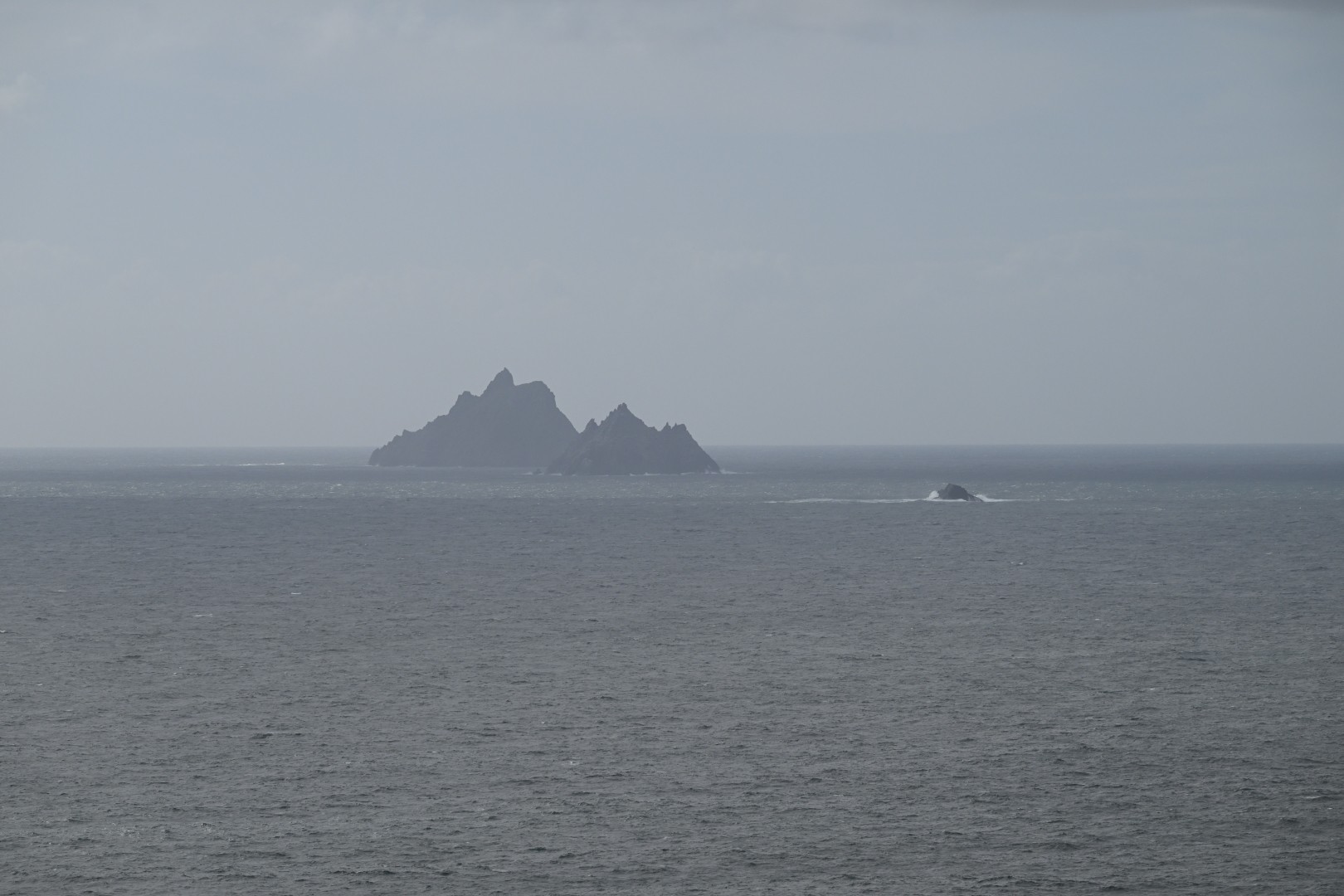
Skellig Michael (more distant) and Little Skellig (slightly closer).
I had been told before I left Australia that one tourist site I should put on my list was the Cliffs of Moher in
County Clare, but while following the route of the Ring of Kerry we saw a sign to the Kerry Cliffs.
According to the sign these were higher and more spectacular that the Cliffs of Moher, so we stopped to take a
look.
As it happened, we didn’t get to see the Cliffs of Moher so I can’t offer an opinion on the relative
merits of the two.
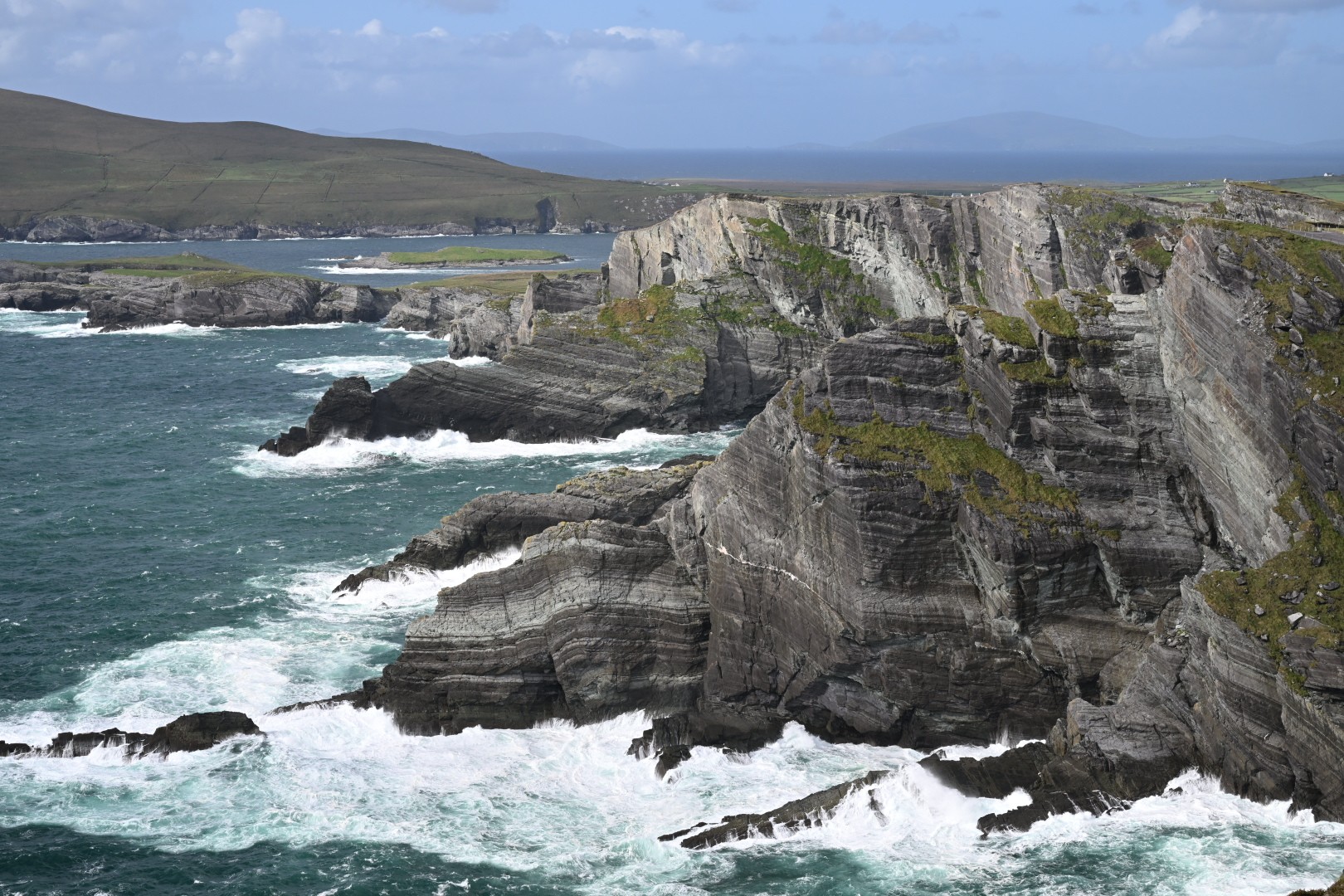
The Kerry Cliffs (with the Dingle peninsula in the far distance).
Dingle
Dingle is a beautiful little town, and we had chosen it for a stay of two nights.
But being beautiful has its downsides.
Everywhere we went in Ireland we were met with warmth and friendliness and a sense of welcome, but in Dingle all
three seemed to be in short supply at the end of a long summer.
I guess it’s difficult to criticise a town as being adversely affected by tourism when we were tourists
ourselves.
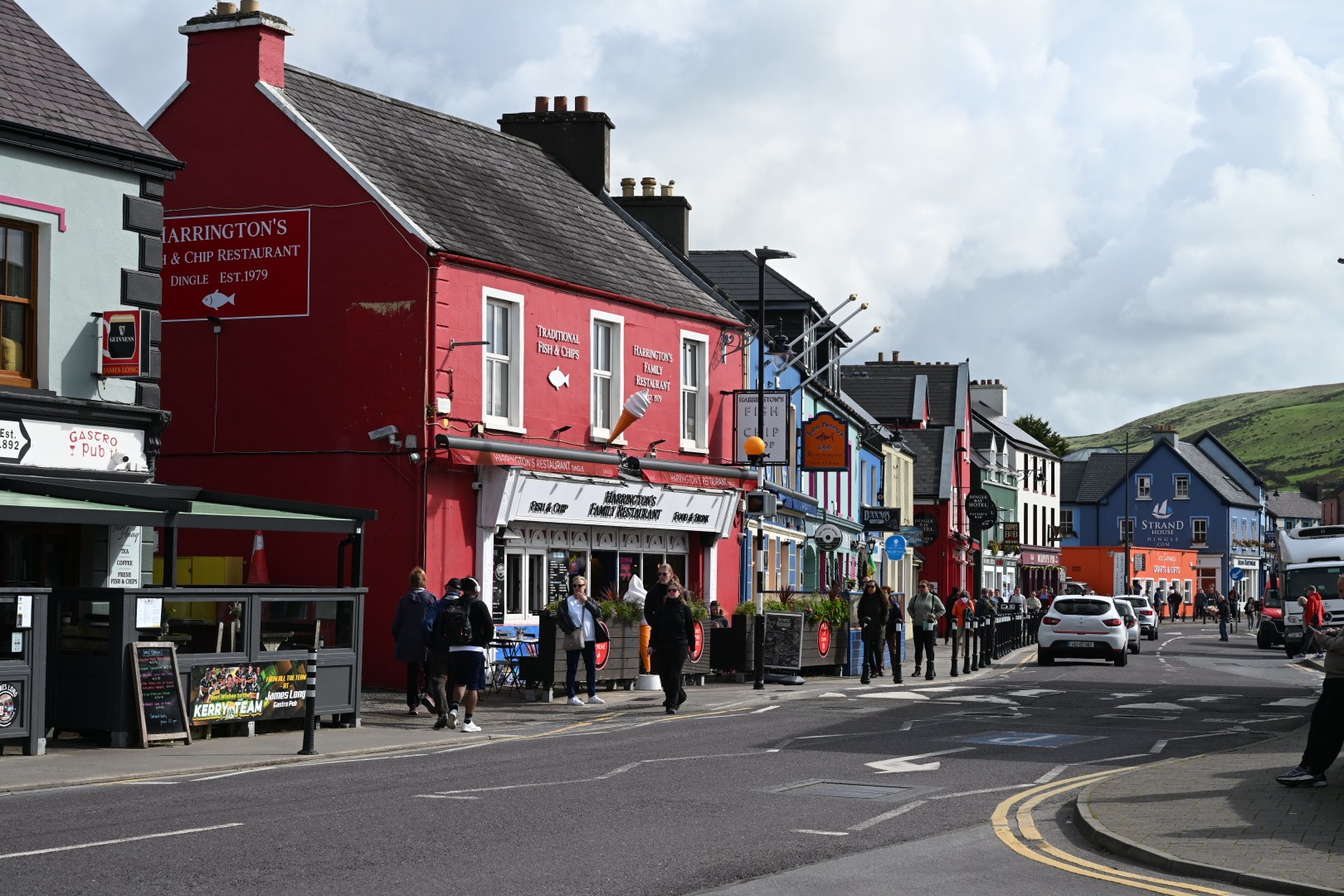
Sráid na Trá (Strand St.), Dingle.
The west of Ireland was particularly badly affected by the potato famine of the 1840s.
There are many abandoned buildings, along with stone walls that once divided productive land but now serve only as
a reminder of a particularly tragic period in Irish history.
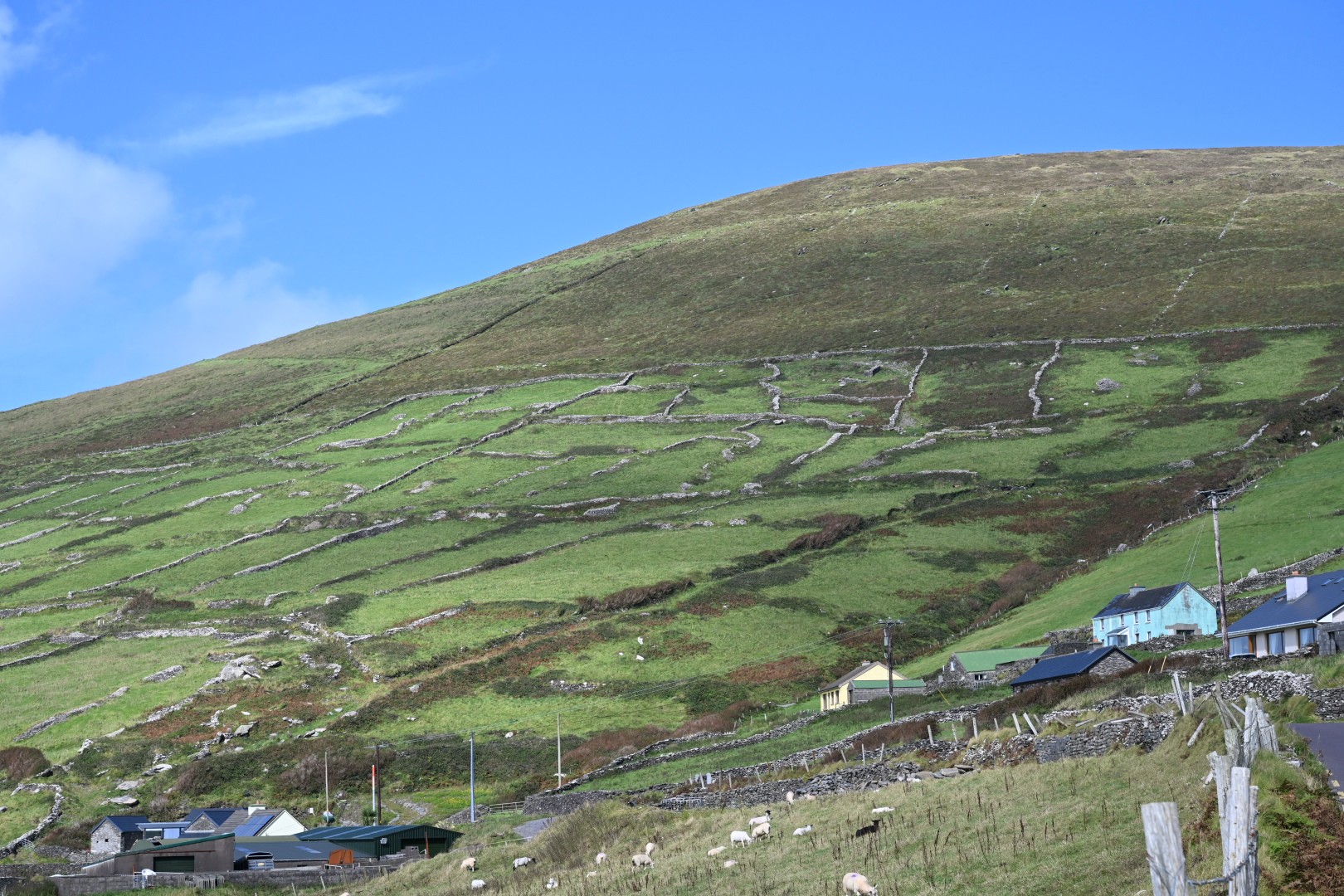
Stone walls on the Dingle peninsula, County Kerry.
The broad glacially-carved landscapes of the west of Ireland present a sharp contrast to the east coast, and the
lack of trees is most likely the result of exposure to the winds off the Atlantic.
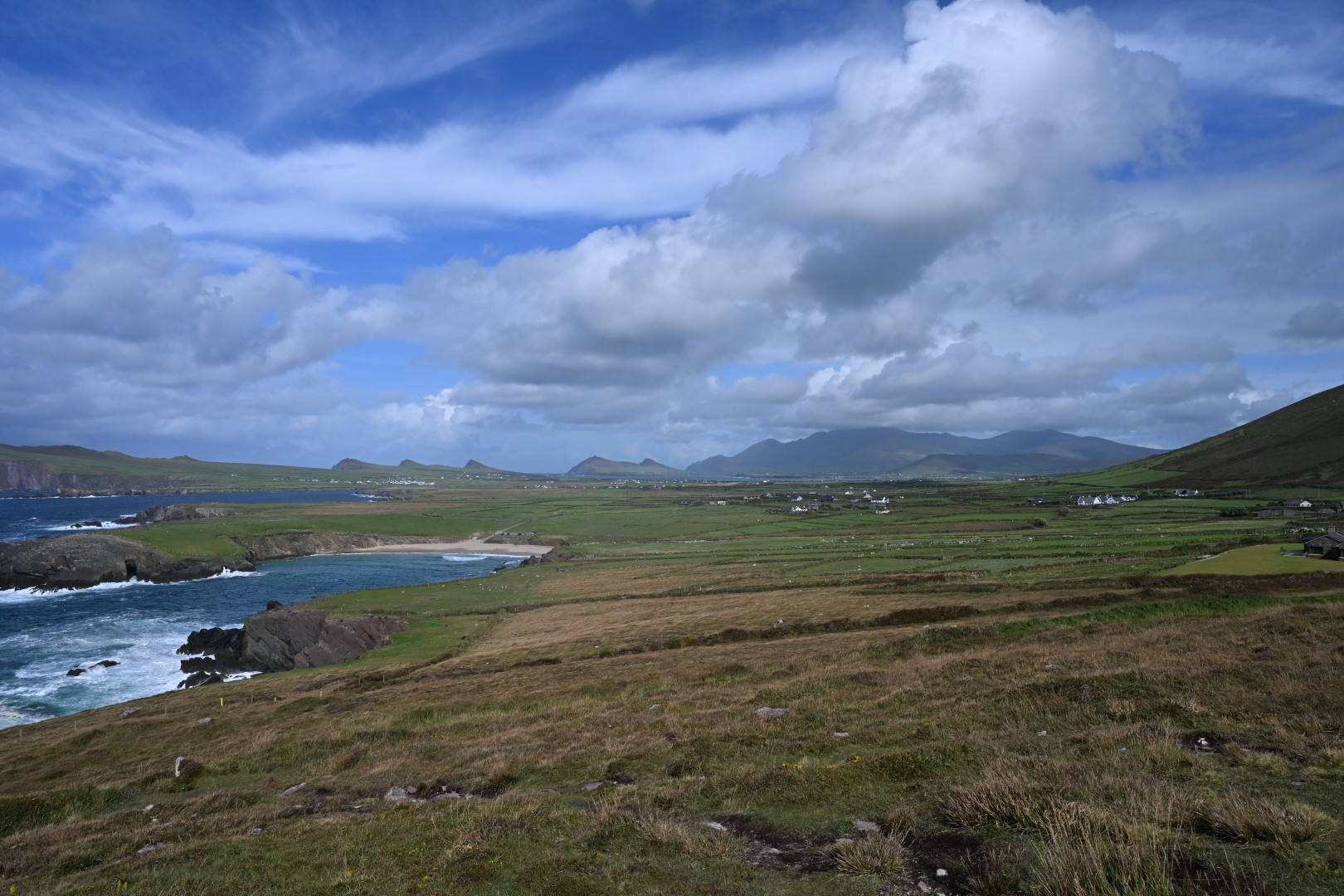
The north side of the Dingle peninsula, with the Three Sisters to the left.
There are many examples of early Christian stone buildings in this part of Ireland, from the tiny “beehive
huts” that are reported to be the homes of individual monks, to the remains of larger places of worship.
One of the most striking of these is the Gallarus Oratory.
(An oratory, as I understand it, is a building for religious purposes that is of lesser status than a church.)
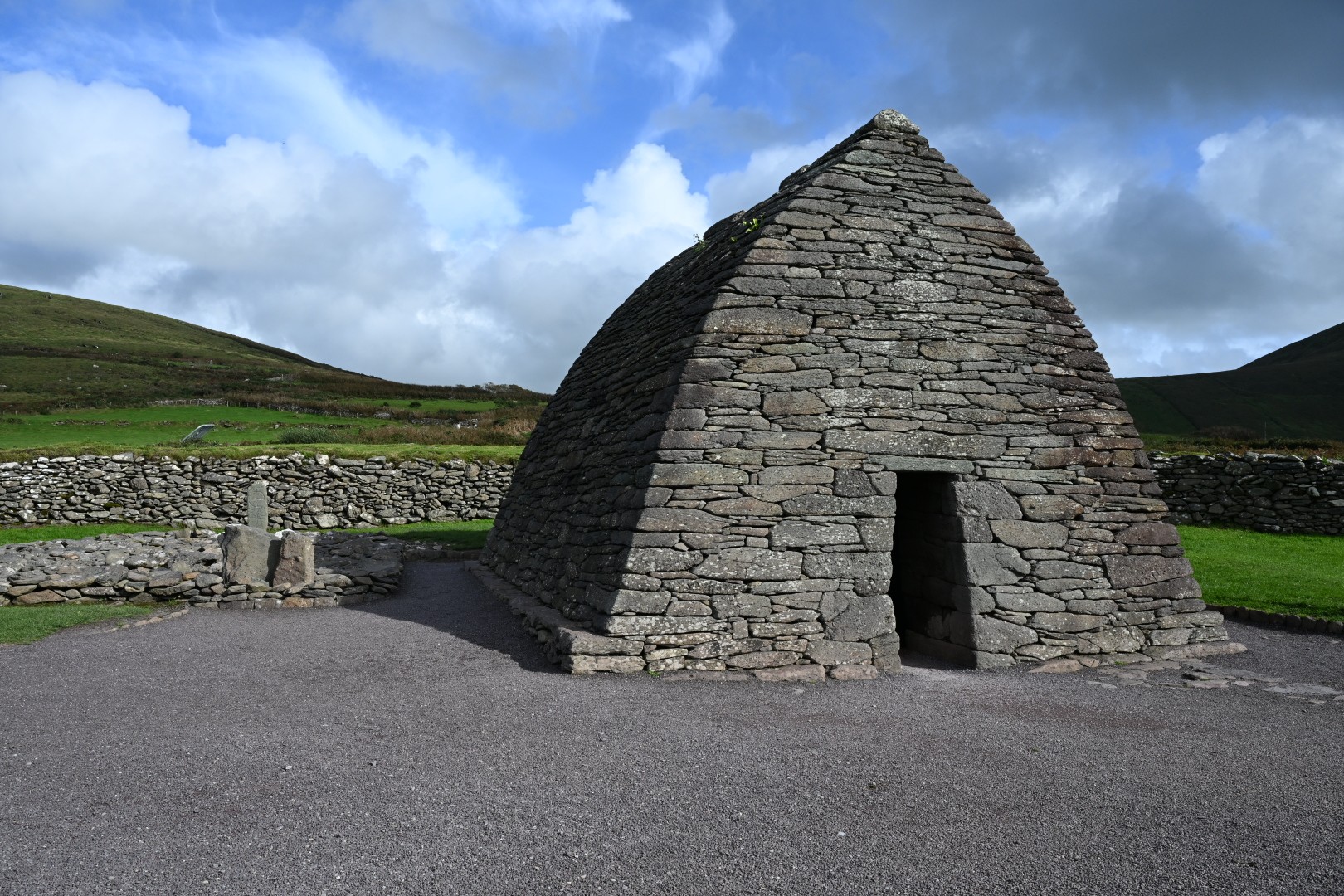
The Gallarus Oratory, Dingle peninsula.
The Burren
Further north from Dingle is the bizarre limestone landscape of The Burren.
This is a vast expanse of exposed limestone (I understand the geological term is karst) which appears to
resemble more closely an alien planet than the green of the rest of Ireland.
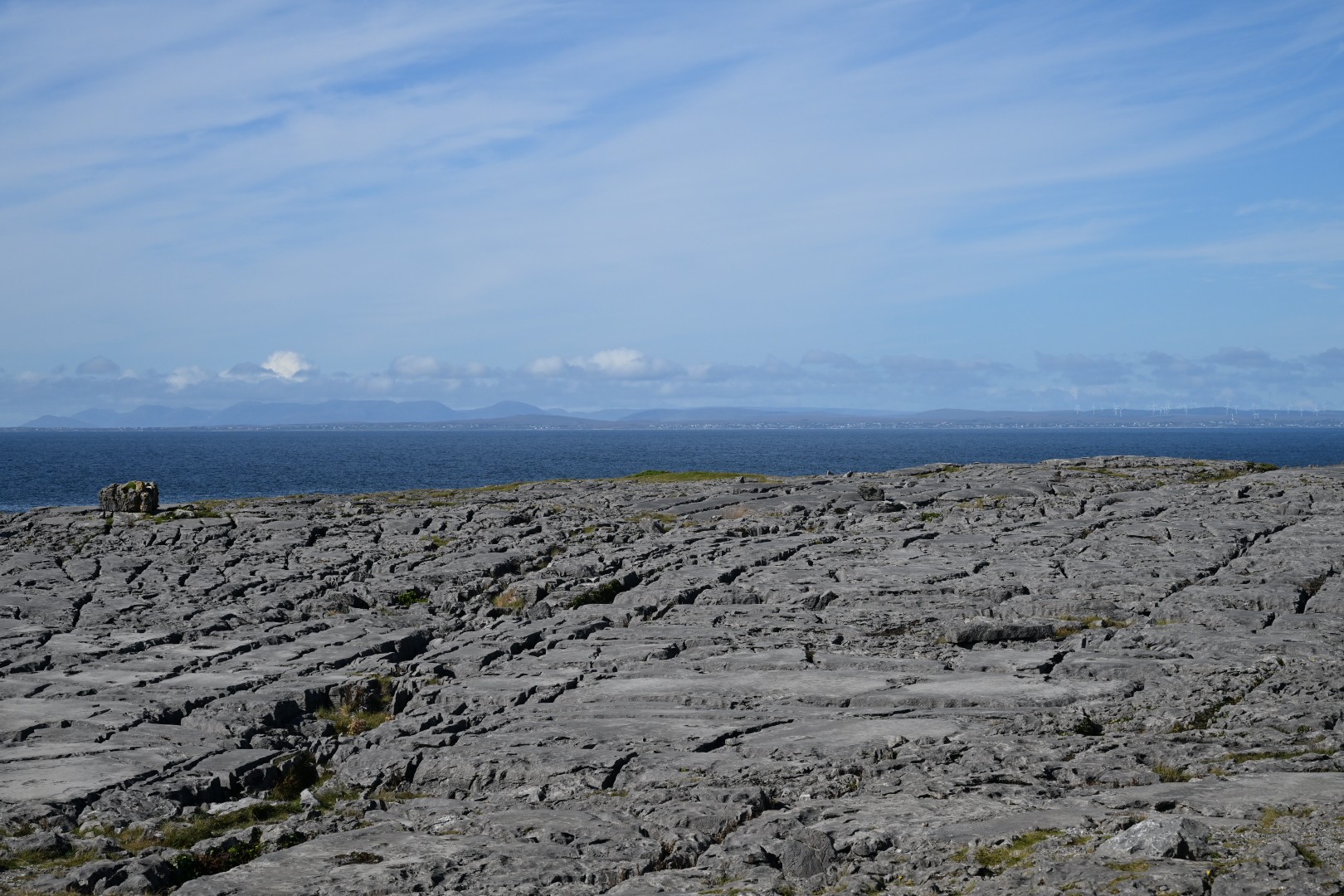
The north end of the Burren, looking north over Galway Bay.
The Burren is home to a number of neolithic sites, including the Poulnabrone dolmen.
This is an ancient tomb, dating from about 3800 to 3200 BCE.
It’s thought that it was covered in earth when it was first completed, but to 21st century eyes, the
exposed stones look far more spectacular than a mound of earth.
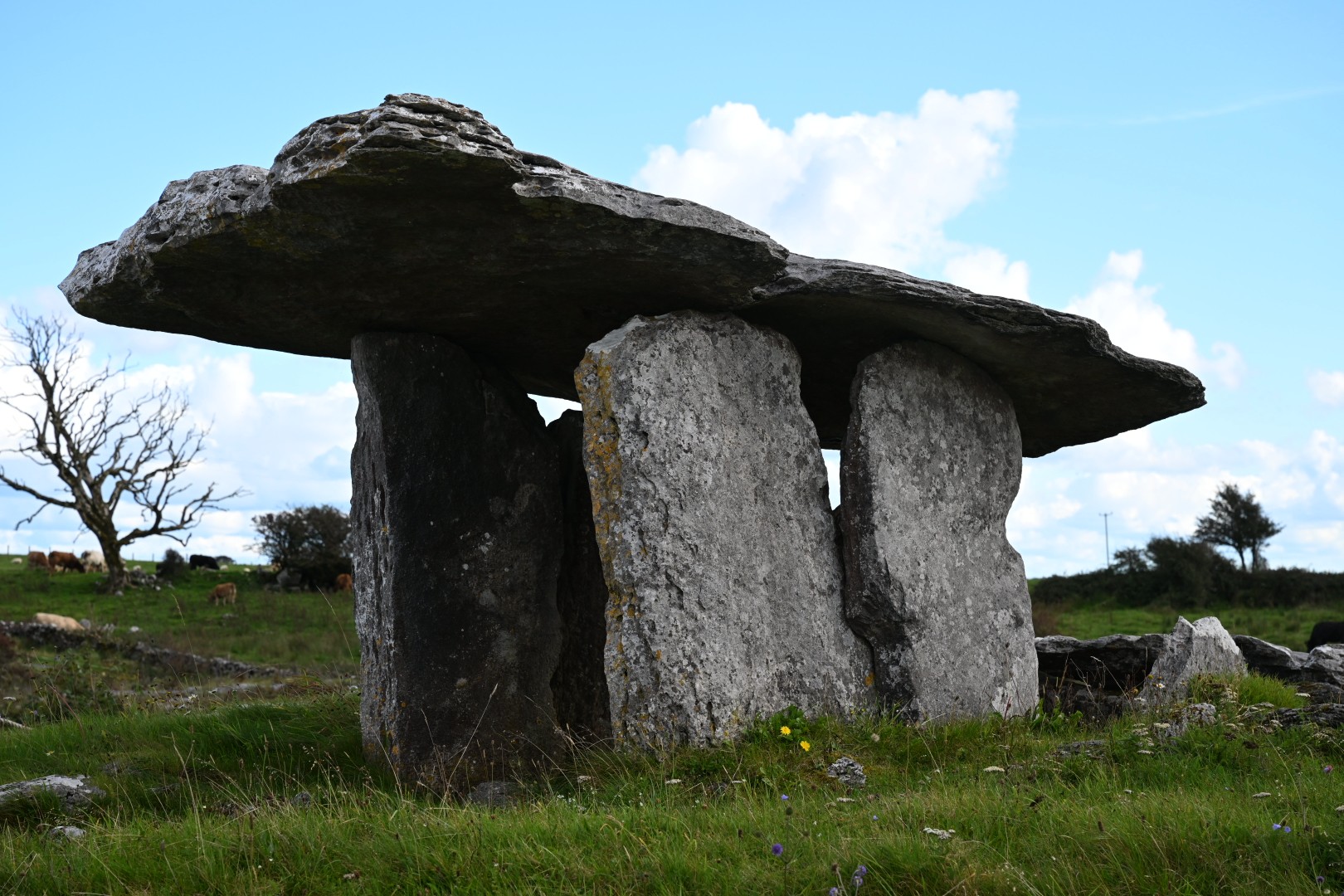
Poulnabrone dolmen, the Burren.
The limestone surface of the Burren is composed of small areas of exposed stone, interspersed with deep gaps
filled with low-growing plants.
From a distance, all you see is grey; close up it looks like a vast irregular patchwork.
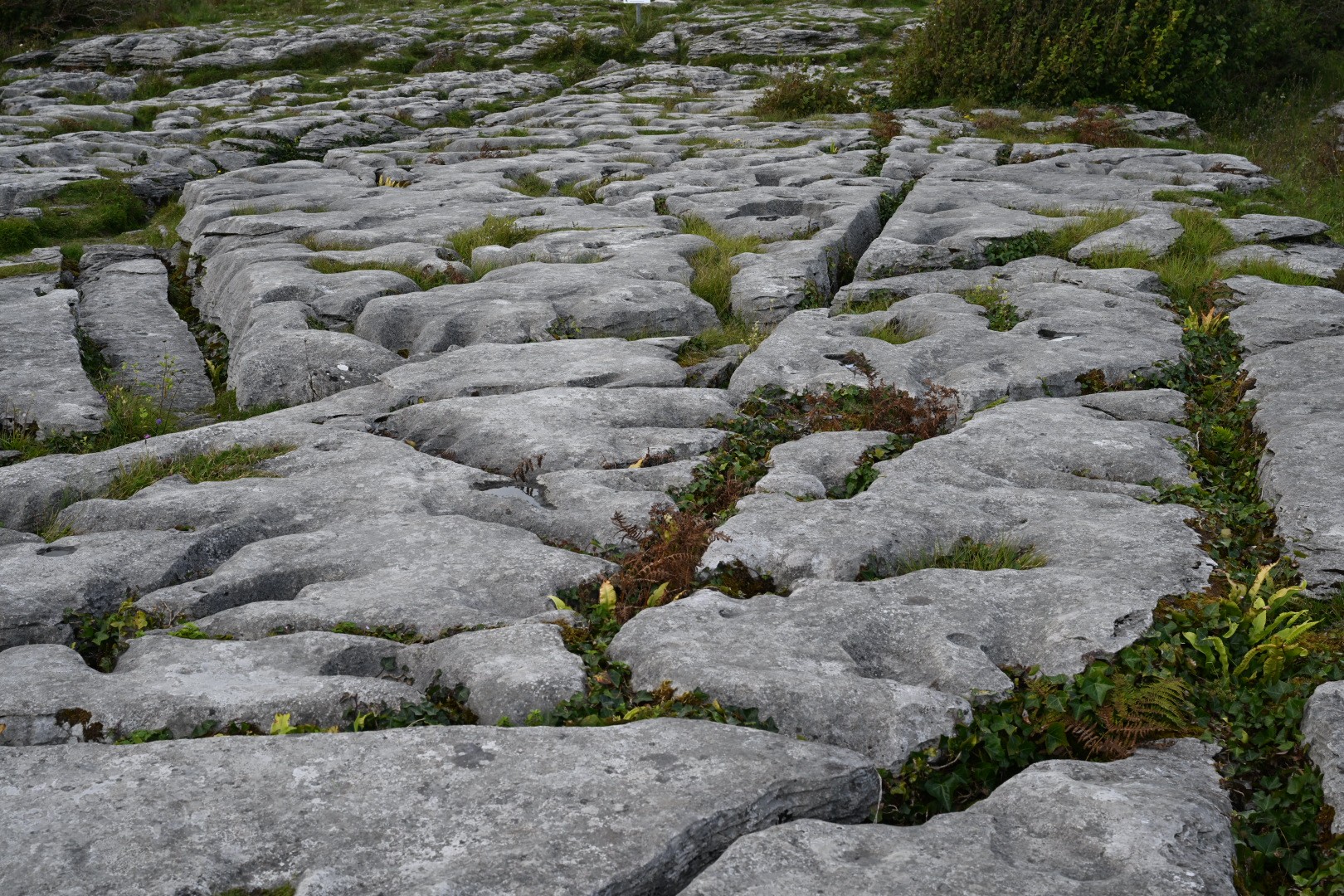
Limestone surface interspersed with vegetation, the Burren.
Galway
Our last stop on the west coast was Galway.
I can remember from my childhood an old sentimental song that included the line “…and see the sun go
down on Galway Bay”.
Sadly, the clouds and the rain meant that we never got to see a sunset.
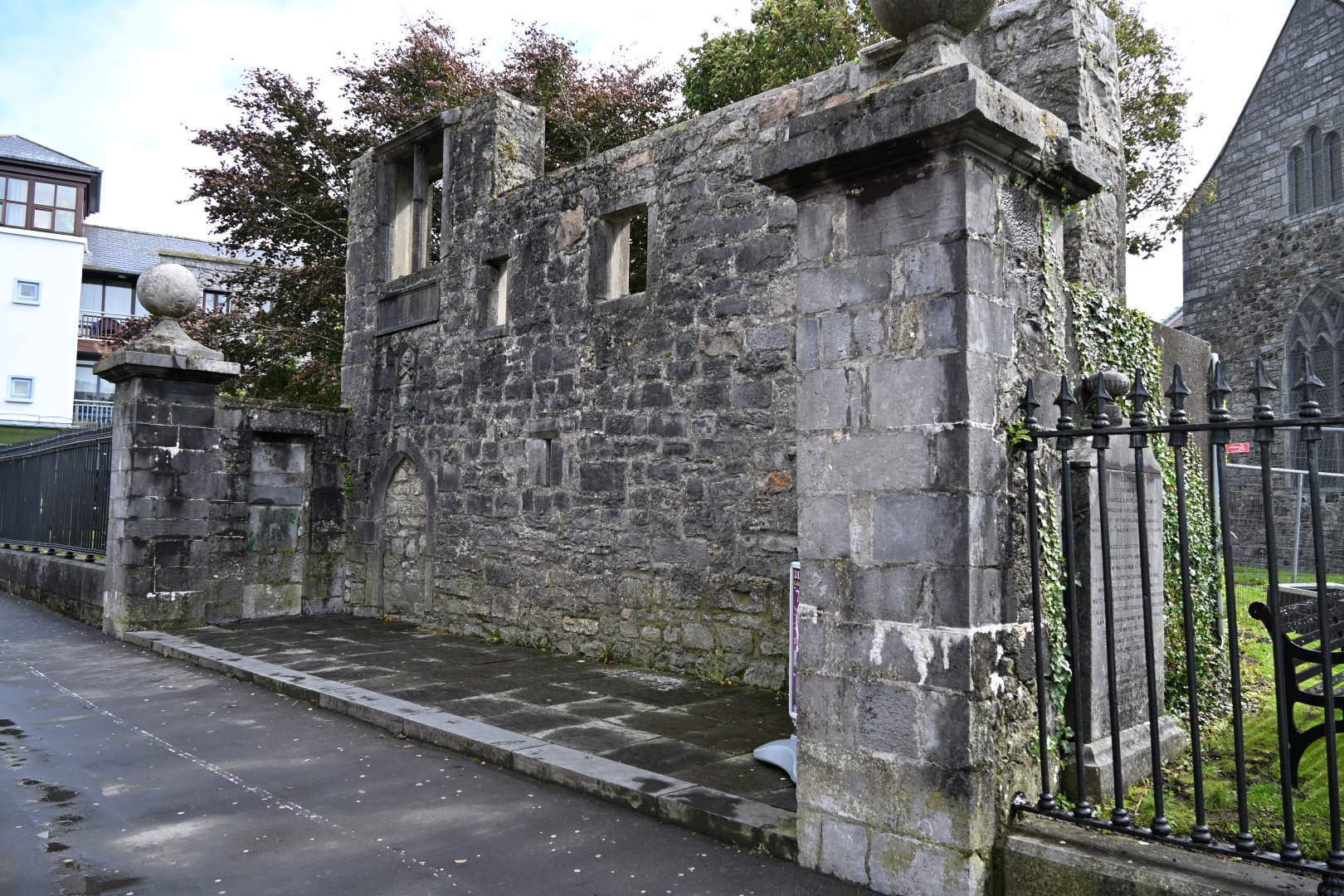
The Lynch Window, Galway.
The story behind this is too long to explain here; look it up if you’re interested.
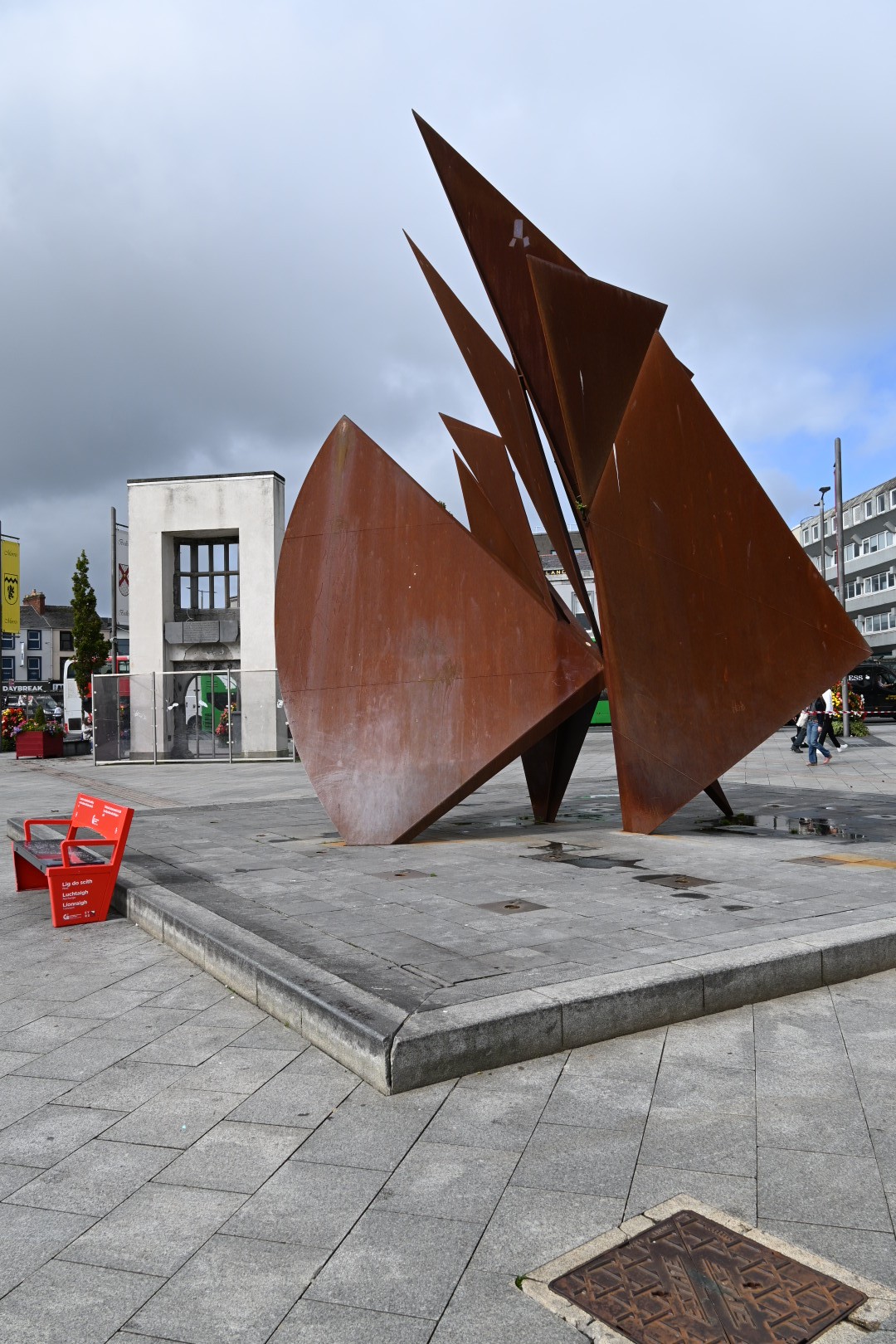
Sculpture in Eyre Square, Galway.
The window to the left is a single window preserved from an otherwise-demolished building.
Again, look it up if you want to know more.
Athlone
From Galway we headed back across the country to Dublin.
On the way we stopped for lunch at Athlone, a town on the River Shannon, in more or less the geographical centre
of the island of Ireland.
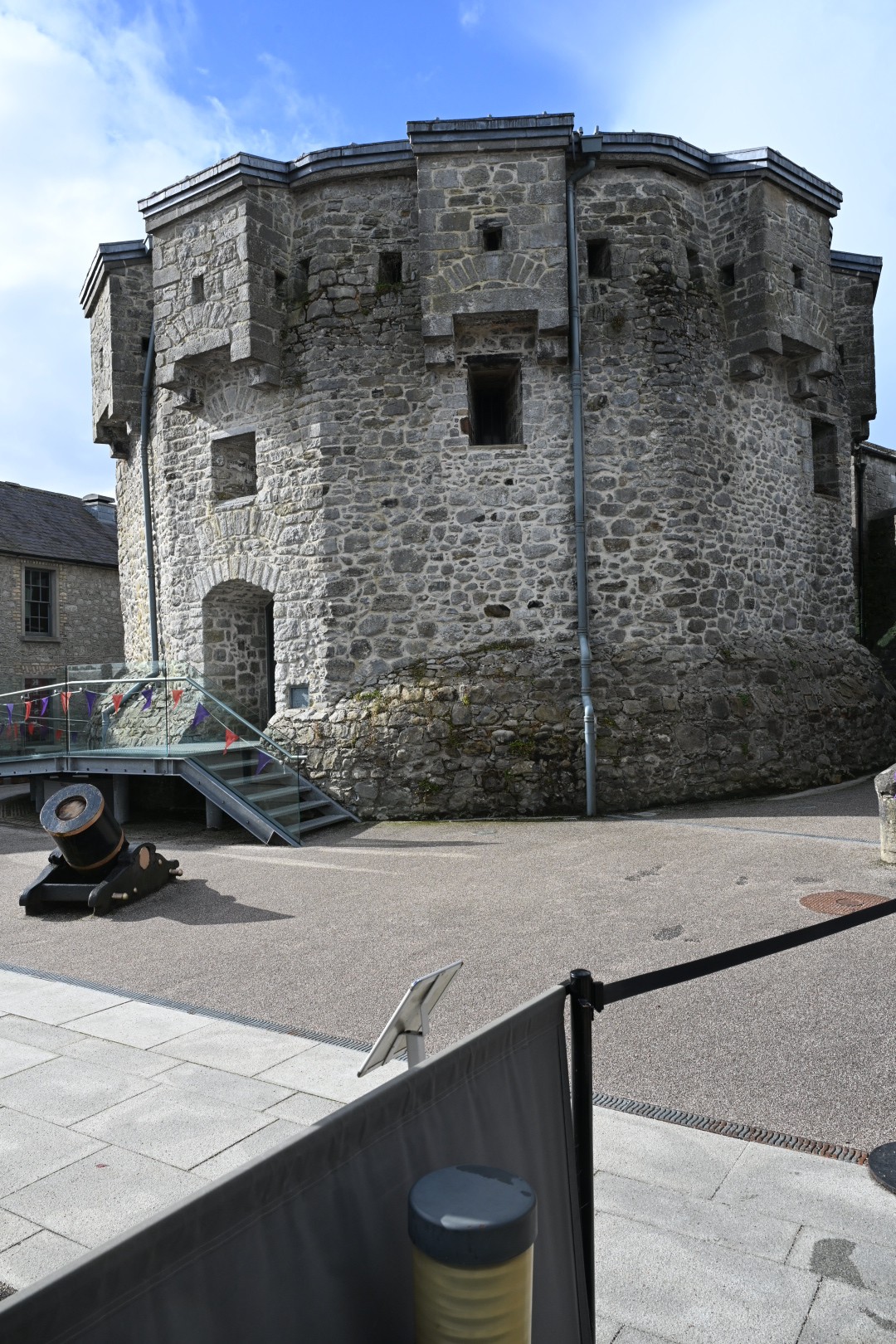
Athlone Castle.
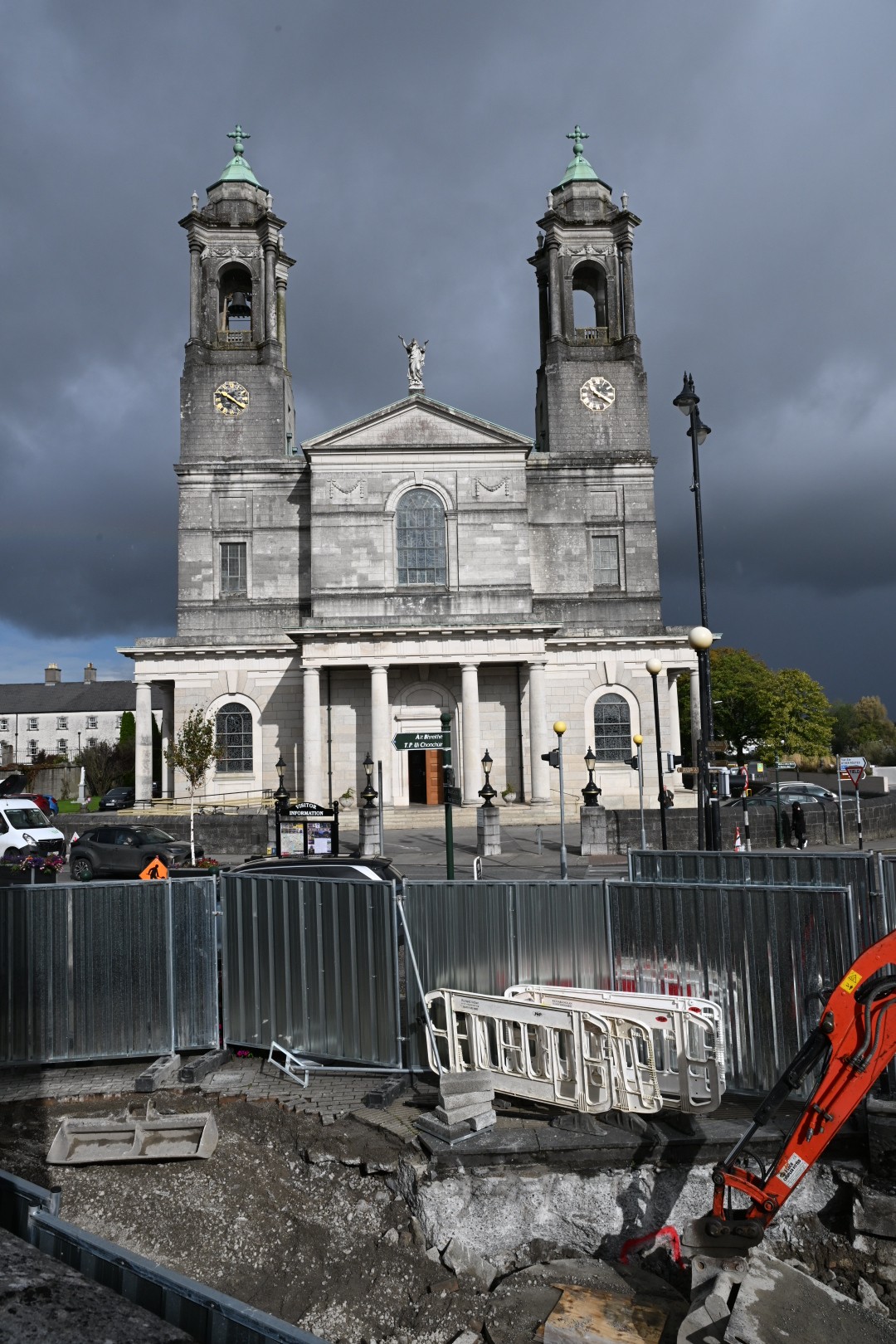
Church of Saints Peter and Paul, Athlone.
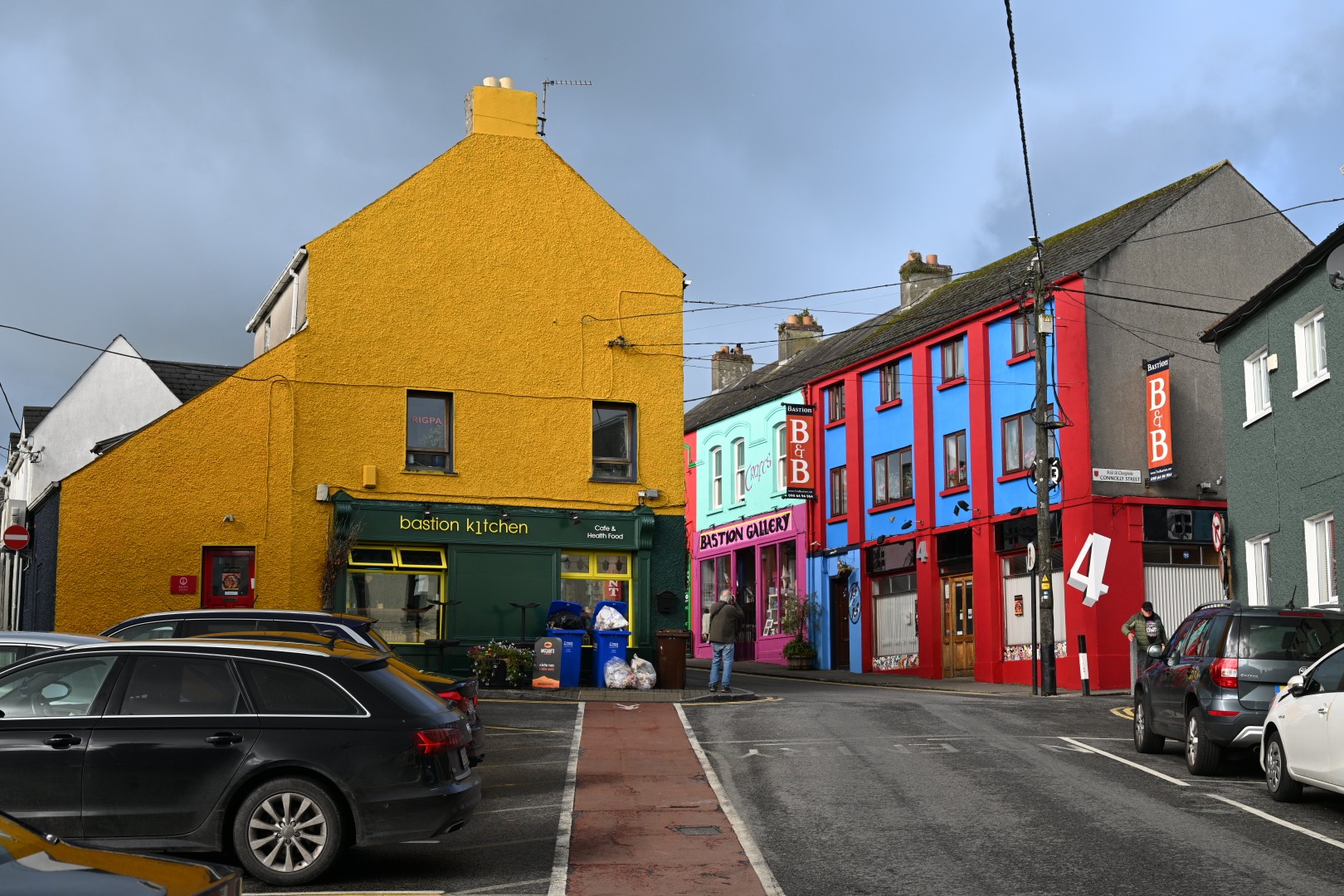
Another example of a brightly-coloured streetscape, Athlone
Looking Back…
I really liked Ireland.
The countryside, the history, the people – with very few exceptions it all made for a very enjoyable stay.
I have a friend in Sydney who was born in Dublin, and I texted him not long after I arrived, telling him I thought
he was mad for choosing to leave.
But that was before the rain set in.
You will see that in my photos the skies are frequently grey – the occasional blue skies were just brief
periods of respite.
I guess for a country which derives a lot of its income from agriculture, rain is an unfortunate necessity.
And I suppose if you live there, you probably learn to organise your life around it.
I have also been inspired to learn more about Irish history.
I already knew that my family name came from the Anglo-Norman invasion of about the 12th century, but by the time
of the later conflicts with England, this population group were much more assimilated into Irish culture than the
later invaders.
When it comes to taking sides, whether against Cromwell in the 17th century or Churchill in the 20th, my
sympathies are definitely with the Irish.
I watched the movie Michael Collins on
the flight home.
I hadn’t seen it before, but having just visited the locations in Dublin – the GPO on what is now
O’Connell St, the Four Courts, the Ha’penny Bridge – helped me to form a clear picture of the
stage on which much of this tragedy played out.
The movie is a fictionalised version of the history of the period, and it unashamedly sides with Collins.
Having looked into the subject more (with the aid of an excellent television series on The Irish Civil War, broadcast on the
Australian channel SBS), it’s possible to criticise both Collins, for accepting a compromise that was bound
to be unpalatable to a great many of his followers, and Éamon de Valera for taking the country into a civil
war rather than agreeing to the compromise, but to my mind the real blame lies with the British, for forcing an
unreasonable compromise on them in the first place.
We are left with an unstable situation, with Northern Ireland remaining a part of a United Kingdom that
doesn’t want them, while no-one with any memory of 20th century Irish history wants to do anything that
might disturb the current fragile equilibrium.
I fear it may be many years before we see a united – and peaceful – Ireland.